Trauma Informed? Dispelling the Jargon and How You Can Make a Difference by Terri Mitchell
In Bristol and beyond, many of us will hear phrases such as ‘Belonging Strategies, Attachment Pledges, Trauma Informed, and ACES’. But what do these things all mean, and how can we understand them and put this knowledge into practice to make meaningful differences to the children and families that we work with? This post will start to unravel and dispel the jargon, but it’s also going to ask you to reflect on your mindset.
I need to ask you to consider a shift in your thinking. I want you to consider viewing behaviours that you might be finding challenging and view them as distressed behaviours. I know this is difficult; it sounds tiny, but it’s actually quite a revolution. Our society, parenting models, justice system, naughty steps, and sticker charts tell us to focus on the behaviours and to reward and punish compliance or non-compliance.
I’m asking you to dig a bit deeper, be curious, and be brave because when we start on this journey, it may take us to uncomfortable places in our reflections. I know I ask a lot of you, but this reflection is really necessary because YOU are the most important person. YOU are what can make a difference to the life outcomes of the children that you are working with.
No pressure!
Developmental trauma in a nutshell
Early Years is a critical time for brain development, it is when the majority of the pathways are created and the potential for who we are and our life outcomes are laid down. These pathways are not made of stone, there is flexibility and movement to create and change, there is always hope.
Some of our children have not had the best start in life; they may have experienced physical, sexual, or verbal abuse, neglect, parental mental illness, a parent in jail, domestic violence or parents splitting up. They may have experienced poverty, food insecurity, the death of multiple people close to them, bullying or peer rejection. These adverse childhood experiences (ACES) literally change the developing brain of our children.
Children’s stress systems are flooded with chemicals meant to be used in short bursts to keep us alive and ready to fight, flight, and freeze. This dripping tap of constant toxic stress has a biological, social, and emotional impact. It changes the brain and children’s responses to how they feel about themselves, their role within their families, relationships, adults, and their place in the world.
Read the Full Blog on Bristol & Beyond SPH's website here: Promoting Positive Relationships through Relationship Mapping – Case Studies from the Early Years - Bristol Early Years Teaching Hub
Read the Full Blog on Bristol & Beyond SPH's website here: Trauma Informed? Dispelling the Jargon and How You Can Make a Difference by Terri Mitchell
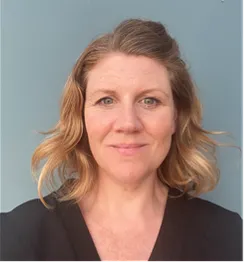
My name is Terri Mitchell. I have been in education for many years! During that time, I have had roles as a class teacher and Early Years Lead before taking on a quality improvement role within Bristol as a Lead Teacher. My role allows me to work with amazing early years teachers, practitioners, leaders, childminders and multi agencies, providing a platform to understand, support, share and celebrate the great practice that exists in Bristol early years.
I have always had an interest in developing and supporting children’s personal, social and emotional development and even ran my own toddler yoga class for a time! In 2020 I embarked on a diploma through ‘Trauma Informed Schools’ and this blew my mind, it literarily changed how I view the world. Since then I have been on a mission to spread the word and share this knowledge that I have been given. My most recent role as a local specialist lead (LSL) alongside my lead teacher role both provide me the platform to start on my hugely wild ambition of making everyone in Bristol trauma and attachment aware.