

Early Language Acquisition: The Path to Fluency
Stella Jones, Director of Research & Development WISE, Director of Town End Research School and Content Lead for Primary Literacy – Research Schools Network

Fluency in language is more than just a developmental milestone - it’s the foundation of a child’s ability to communicate, understand others and navigate the world around them. From their earliest babbling to speaking in full sentences, fluency grows naturally but is deeply influenced by motivation and success. Understanding how these factors drive a child's language development—through the lens of Ryan and Deci's Self-Determination Theory (SDT) - helps us appreciate the process of learning to speak as a complex journey shaped by key psychological needs.
Self-determination in early language development
Ryan and Deci’s Self-Determination Theory (SDT) suggests that children, like all people, are most motivated when three fundamental needs are met:
1. Autonomy - the ability to explore and use language on their own terms.
2. Competence - the sense that they are mastering communication skills and being understood.
3. Relatedness - the connection with caregivers and others that makes communication meaningful and rewarding.
As children begin to communicate, these needs shape their journey toward fluency. When children feel empowered, successful and connected, they naturally progress in their language abilities. This motivation is crucial to building fluency.

Success and competence in learning to speak
From a baby’s first sounds to a child’s ability to construct full sentences, success plays a critical role in building competence. Every time a child’s attempts to communicate are met with a positive response—whether it’s a smile from a parent or being understood—they experience a sense of success. This success fuels their motivation to continue experimenting with language, which helps them develop competence.
Early successes, like saying “Mama” or “bye” and being understood, are key milestones. These victories make children eager to try new words and phrases. For example, when a toddler successfully uses a word to get what they want, such as asking for “juice,” they not only feel capable but are encouraged to keep using language to meet their needs.
Motivation in language learning: Intrinsic vs. extrinsic
In language development, children are driven by intrinsic motivation - the natural desire to explore, communicate and understand their surroundings. According to Ryan and Deci, intrinsic motivation is more powerful and sustainable than extrinsic motivation (like praise or rewards). For young children, the internal joy of connecting with others and being understood is a powerful motivator for language growth.
Autonomy plays a significant role in nurturing intrinsic motivation. Allowing children to experiment with language through play, storytelling or simply talking to others gives them the freedom to explore words and phrases that interest them. This autonomy supports their curiosity and desire to communicate, leading to faster development of fluency.
Generalisation and comprehension in language use
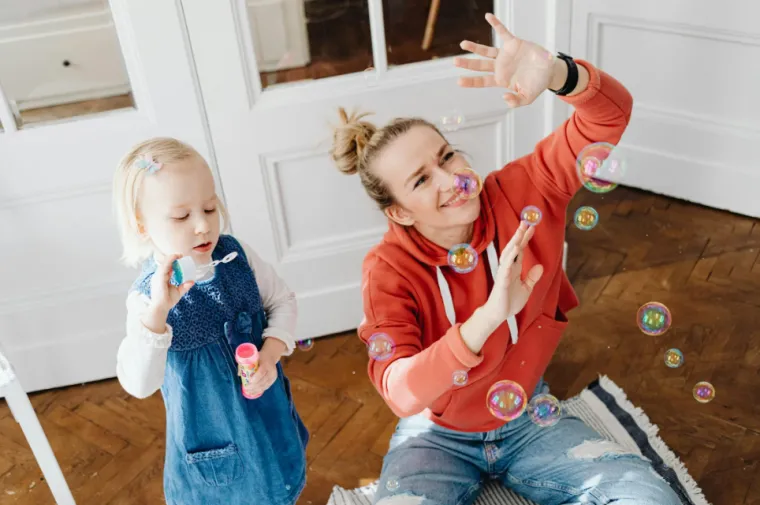
As children grow more fluent in their native language, they begin to generalise language rules across different contexts. They apply grammatical structures, vocabulary and patterns they’ve learned to new situations. For example, a child who learns how to ask for “more juice” can soon use the same structure to ask for “more bubbles” or “more park”.
This ability to generalise enhances a child’s capacity to express themselves in a variety of ways. Fluency also improves their comprehension of others, enabling them to follow instructions, understand conversations and make sense of their world.
Building fluency through everyday practice
Children build fluency naturally through everyday experiences. Here’s how this process unfolds:
Practice and repetition: Children practice language through daily conversations, play and storytelling. Repetition of words and phrases helps them internalise language patterns, making their speech smoother and more fluent.
Interaction: Engaging in conversations with caregivers, siblings and peers gives children the chance to use language in real-world situations. These interactions allow them to adapt their communication to different people and contexts.
Reading and listening: Listening to stories, songs and conversations exposes children to a wide range of vocabulary and language structures. This helps them develop fluency in how they express themselves.
Positive feedback: Every time a child’s attempts to communicate are met with encouragement, it reinforces their sense of competence. Positive feedback boosts their confidence and motivates them to keep learning.
Fluency and confidence
As children become more fluent, their confidence grows. A child who feels comfortable expressing their needs and engaging in conversation with others is empowered. This confidence reinforces their ability to generalise language rules and develop a deeper understanding of their native language.

The cycle of success and long-term fluency
The journey to fluency is an ongoing process fuelled by a child’s intrinsic motivation to communicate. Ryan and Deci’s Self-Determination Theory shows that when children’s psychological needs—autonomy, competence and relatedness—are met, they are motivated to succeed. Success in communication builds competence, which in turn fuels their motivation to keep exploring and growing their language abilities.
Fluency is about ease, accuracy, and depth of expression. By encouraging children’s curiosity, supporting their attempts at communication and nurturing their social connections, caregivers and educators help children achieve this essential developmental milestone. Supported and motivated children are more likely to become fluent, confident speakers who can navigate and understand the rich world of language.
However, as Hart and Risley's research illustrates, the environment in which a child grows up plays a pivotal role in this journey. The stark contrast in language exposure experiences has profound effects on language acquisition. Addressing this gap, through enriched communication environments for all children, is essential to ensuring that every child has the opportunity to become a fluent, confident speaker.