
Lil is a retired Maintained Nursery School headteacher with a lifelong interest in sustainable living, ecology and climate change.
Why we should listen to children
A four-year-old once asked me
‘Will you get a flat for my dad, he is sleeping on a sofa?’
He was eating some breakfast in our nursery staff room, I replied that I certainly would write to the council to see if I could help. That same year, another child ran over to me as I walked up the path next to the garden where he was playing. Through the fence he asked:
‘Can you get me a mum like Mrs M? I wish you could, I’d like a mum like her.’
This child was later taken into care.
Children have always had a voice when they know the adult is listening and is prepared to help.
A changing climate
Children born in 2020 will experience a two to seven-fold increase in extreme climate events, particularly heatwaves, compared to people born in 1960 (UNESCO) and 75% of young people say they are frightened about their future.
As the caretakers of the planet for the young children in our care, what permissions do we have and what can we do to ensure we create an early education system that embeds climate responsibility in everything we do?
Last year, the Oxford University Press children's word of the year was 'climate change'. 5,000 children were surveyed across the UK aged 6-14. The research revealed young people's desire for action with emotive words such as 'need' and 'important' occurring frequently in their statements. Impact on the wider world, their current lives and the future were cited as the main reason for the word choice, whilst 'sad', 'scared' and 'worried' were the most common responses by young people when asked how the word makes them feel.
Analysis of the Oxford Children’s Corpus, the largest children’s English language database in the world containing over half a billion words, showed the topic of climate change is regularly written about by children. Studying the most recent addition to the Children’s Corpus, the stories submitted for the BBC 500 Words 2023 story competition, ‘stop’ is revealed as the most common word used in the context, underlining children’s resolve to alter the course of climate change.
‘We know the importance of listening carefully to children, of tuning into their motivations so that we can provide opportunities for learning’
A meaningful curriculum
As Early Years Educators we know the importance of listening carefully to children, of tuning into their motivations so that we can provide opportunities for learning that are intrinsically motivating to them, where choice helps develop agentic behaviours. (Ryan and Deci, 2000 and Farini and Scollan, 2019).
We know that listening carefully means we can provide meaningful and longer conversations that provoke deeper thinking and problem solving, (Sameroff and Fiese 2000). The EEF Evidence Store – Communication and Language clarifies that practitioners need to support and model effective linguistic aspects of communication. The work of Immordino Yang (2015) clarifies the basis and importance of emotional connection in learning.
Sustainable development education must focus on first hand experiences
On World Environment Day this year, UNESCO unveiled a new tool for greening schools and curricula, highlighting the need to empower young people to play a role in tackling the climate crisis.
UNESCO launches new initiatives for “greening education” in classrooms | UNESCO
This report highlights the central role of education in tackling climate change and cautions that formal education has focused too much on imparting knowledge about environmental issues, rather than implementing change. This is failing to show learners the role they can play in tackling the climate crisis. The report argues that sustainable development education must also focus on first-hand experiences which are more likely to lead to change. It tells us that greening schools and curricula is one of the best levers to tackle climate change in the long-term and that it’s time to mainstream environmental education across subjects, at all levels of education.
Levelling the playing field
As Early Years Educators we know that the disadvantaged children in our setting are much less likely to hear a rich vocabulary (Hart and Risley 1992, 1995), than their more affluent peers. If we are to help every child to develop into the informed and responsible citizens they deserve to be, then our young children need access to informed and knowledgeable adults, who can share knowledge in teachable moments and through a rich curriculum.
Jane Turner, Associate Professor at the University of Hertfordshire and Chair of Primary Science Curriculum review group 2023, following the release of their report stated:
‘As primary educators, we know how important it is for children to develop secure and meaningful scientific understanding and positive attitudes towards science at this crucial stage in their education. This means they can go on to take their place in the world as informed and responsible citizens, ready and able to meet the global challenges of sustainable and equitable living'
The EYFS Understanding the World (UW) asks practitioners to:
‘foster their understanding of our culturally, socially, technologically, and ecologically diverse world’ (EYFS, DfE, 2024, p11).
To do this they need to build ‘important knowledge’, which ‘extends familiarity with words that support understanding across domains’ (EYFS, DfE, 2024, p11).
Sustainable Development Goals
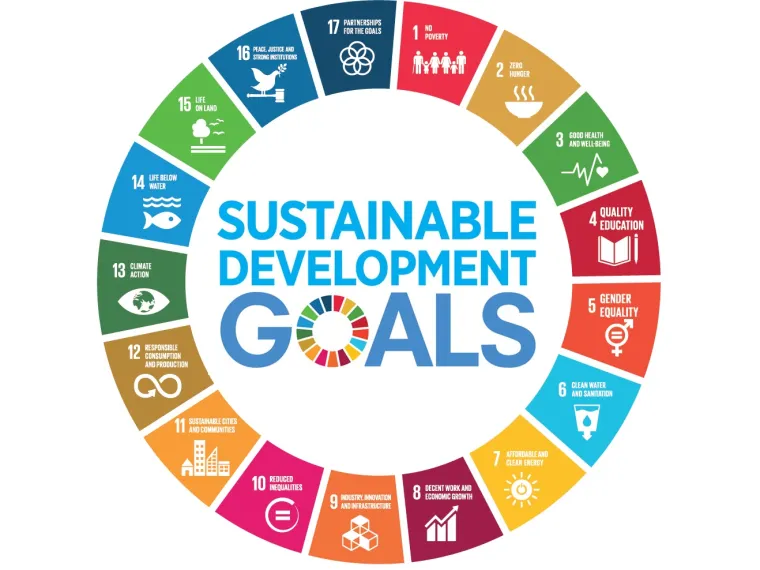
The Sustainable Development Goals (SDGs) are a universal call to action to end poverty, protect the planet, and ensure that by 2030 all people enjoy peace and prosperity. Adopted in 2015, the SDGs are the world’s shared plan to end extreme poverty, reduce inequality, and protect the planet by 2030. They aim to transform our world by ending poverty and inequality, protecting the planet, and ensuring that all people enjoy health, justice and prosperity.
In September last year the UN produced a child friendly version of General Comment 26, a legal guidance on how children’s rights are impacted by environmental harm and climate change and what governments must do to uphold these rights to ensure that children live in a clean, healthy and sustainable world.
From the UK government we have the DfE strategy 2022, Sustainability and Climate Change Strategy for Education. One of the key initiatives is ‘sustainability leadership and climate action plans’. This document highlights the importance of leadership, a whole setting approach and starting from where each setting is in its sustainability journey. It states that ‘by 2025, all education settings will have nominated a sustainability lead and put in place a climate action plan’. This includes early years settings, schools, multi-academy trusts, colleges, and universities.
What is a Climate Action Plan?
A climate action plan is a roadmap to enable each setting, to progress or commence sustainability initiatives. Formulating our Climate Action Plans will help practitioners think intentionally about why we do what we do for our children and their communities and their world and how we will implement changes. It has four focus areas: decarbonisation, adaptation and resilience, biodiversity and climate education and green careers.
The government strategy states that a whole setting approach is important, learner’s views should be considered, involving them in climate action planning, as this will help climate anxiety, and that settings should involve the local community.
Nature Connection
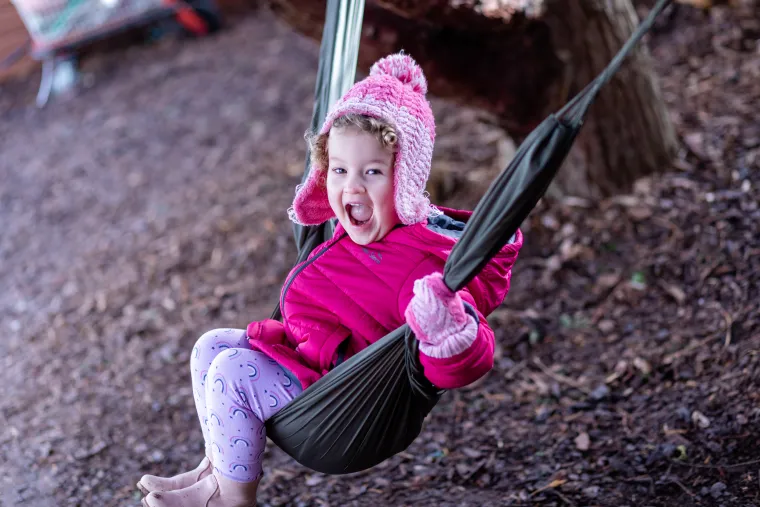
One of the three strands of Climate Education identified in the DfE strategy is Nature Connection and much has been heard recently about the value this brings to all of us and each child’s entitlement to this. The lack of connection that has developed between humans and the natural environment that is around them is of concern to many.
Mental health and wellbeing and the physical health of humans is now linked to gut health and this in turn to soil health.
Our role as educators
This brings us full circle to thinking about our role as educators and carers of the youngest children and the importance of the environments we provide for their play and our duty as educators.
The Britain Get Talking | Home (itv.com) campaign has once again made it clear that children want adults to talk to them about things that matter and this supports positive mental health.
References
Greening Education Partnership: getting every learner climate-ready - UNESCO Digital Library
Oxford Word of the Year 2023 | Oxford Languages (oup.com)
Self-determination theory and the facilitation of intrinsic motivation, social development, and well-being - PubMed (nih.gov) Ryan and Deci 2000
Children’s Self-determination in the Context of Early Childhood Education and Services: Discourses, Policies and Practice Farini and Scollan 2019
Sameroff, A. J., & Fiese, B. H. (2000). Transactional regulation: The developmental ecology of early intervention. In J. P. Shonkoff & S. J. Meisels (Eds.), Handbook of early childhood intervention (2nd ed., pp. 135–159). Cambridge University Press. https://doi.org/10.1017/CBO9780511529320.009
Child-directed speech: Relation to socioeconomic status, knowledge of child development and child vocabulary skill ML Rowe - Journal of child language, 2008
Immordino-Yang, M. H. (2016). Emotions, learning, and the brain: Exploring the educational implications of affective neuroscience. W. W. Norton & Company.
UNESCO launches new initiatives for “greening education” in classrooms | UNESCO
Hart, B., & Risley, T. R. (1995). Meaningful differences in the everyday experience of young American children. Paul H Brookes Publishing
PCAG publish report on the future for the primary science curriculum (rsb.org.uk)
CRC/C/GC/26: General comment No. 26 (2023) on children’s rights and the environment with a special focus on climate change | OHCHR
https://doi.org/10.1016/j.dib.2023.109003Roslund, M., Parajuli, A., Hui, N., Puhakka, R., Grönroos, M., Soininen, L., Nurminen, N., Oikarinen, S., Cinek, O., Kramna, L., Schroderus, A.-M., Laitinen, O., Kinnunen, T., Hyöty, H., & Sinkkonen, A. (2022). A Placebo-controlled double-blinded test of the biodiversity hypothesis of immune-mediated diseases: Environmental microbial diversity elicits changes in cytokines and increase in T regulatory cells in young children. Ecotoxicology and Environmental Safety, 242, Article 113900. https://doi.org/10.1016/j.ecoenv.2022.113900
Additional links:
Early Years Evidence Store | EEF (educationendowmentfoundation.org.uk)
Early years foundation stage (EYFS) statutory framework - GOV.UK (www.gov.uk)
Development Matters - GOV.UK (www.gov.uk)
Sustainability and climate change: a strategy for the education and children’s services systems - GOV.UK (www.gov.uk)
Greening curriculum guidance: Teaching and learning for climate action | UNESCO
Child friendly version of General Comment 26:
Child Friendly Version copys (childrightsenvironment.org)