

About the Author: Katrina Di Girolami is the Early Years Lead for WISE Academies Trust. Since qualifying as a teacher in 2007, she has worked in Early Years, and currently leads a team of key educators across the Trust. Her recent work has focused on developing the Trust’s Writing Guidance, ensuring it is fully aligned with the most recent research and statutory guidance.
Writing presents a hugely complex task for our youngest learners. This series of blogs explores key messages from the DfE Writing Framework and Ofsted’s Strong Foundations in the First Year of School report, emphasising why securing early writing skills is crucial for a child's educational journey. We are committed to getting writing right at WISE Academies Trust, and throughout this series you'll find an exploration of the pivotal areas we prioritise. In Part 1 of this series, we explored how robust oral composition forms the bedrock of effective writing. We focused on the power of spoken language, and vocabulary as the essential ingredients for great ideas. But having a brilliant idea in your head and even telling it to someone else, is only part of our storytelling journey.
How do we help our early writers successfully translate those rich, internal narratives onto the page? The answer lies in mastering the technical side of writing: transcription.
📝 What is Transcription in the Early Years?
Transcription is the process of physically writing words down on paper. It is the complex coordination of two main mechanical skills:
- Handwriting: The physical act of forming letters legibly and with fluency.
- Spelling: The ability to remember and accurately apply the correct sequence of letters to represent a spoken word.
For a young child, these processes are not automatic. Every word, every letter form, and every sound-to-symbol connection requires intense concentration. This is why focusing on transcription skills is paramount in the early years.
🧠The Problem of Cognitive Load: Prioritising Accuracy
Imagine a child with a fantastic story to tell. If their brain is overloaded trying to form letters and spell unfamiliar words, their capacity for high-quality composition is dramatically reduced. This is the issue of cognitive load.
The challenge is two-fold: we must reduce the load, and we must also prevent the embedding of poor habits.
- Avoid Overload: If a child is composing independently but hasn't fully mastered the spelling or letter forms for the words they are using, their limited working memory is spent struggling with the mechanics, leading to simplified writing output.
- Preventing Errors: Allowing a child to repeatedly produce words that do not match their phonic knowledge can inadvertently embed incorrect spellings. If transcription is not fluent, it can negatively impact spelling accuracy.
The Goal: Our primary aim is to make transcription skills automatic and accurate. When a child can write a word correctly and fluently without having to think about the mechanics, their cognitive resources are freed up to focus entirely on their composition—their vocabulary, their sentence structure and their narrative flow.
✏️Key Pillars of Early Transcription
Developing automatic transcription requires deliberate practice across two core areas:
1. Handwriting and Fine Motor Control
Before a child can write, they must be physically ready. This involves developing the essential fine motor skills, core stability, and the correct pencil grip.
- Pencil Grip and Posture: Teach and model the correct tripod grip early on. Ensure children have a comfortable, well-supported seating position.
- Forming Letters: Focus on teaching correct letter formation and directionality from the start. ‘Start points’ are crucial to encourage fluid, joined-up writing later on. Consistency in forming letters builds muscle memory, which is the foundation of fluency.
- Beyond the Pencil: Remember that fine motor skill development doesn't just happen with worksheets. Activities like cutting, threading, building with small bricks, and using playdough all strengthen the hands and fingers required for effortless transcription. For evidence-based approaches on supporting physical readiness for writing, explore the EEF’s guidance on Physical Development, which includes mark-making and letter formation.
2. Phonics and Spelling Knowledge
Spelling is the bridge between the sounds a child can say and the symbols they must write. A robust, systematic phonics programme is essential here.
- From Sound to Print: Children need to become confident at segmenting a word (breaking it into sounds) and grapheme-phoneme correspondence (matching sounds to their written representations). This allows them to translate a spoken word like cat into 'c-a-t'.
- Systematic Spelling Practice: The Department for Education's Writing Framework guidance strongly supports a systematic approach to teaching spelling:
"The guidance emphasises the importance of teaching spelling systematically, starting with phonics in reception, and the need for pupils to have plenty of practice in applying spelling knowledge. It recommends dictation as a way for them to practise spelling." (DfE Guidance) - High-Frequency Words: Practice and recall of common exception (or 'tricky') words is vital. These words often appear early and frequently, and automating their spelling reduces the need to stop and sound them out every time.
- Practising with Dictation: Dictation is a powerful, low-stakes way for children to practice applying their technical skills without the cognitive demand of composition. This practice must be carefully sequenced to align with their learning. This means:
- Adults must dictate carefully selected words, phrases, and sentences that only contain the phoneme-grapheme correspondences (GPCs) the children have been explicitly taught in their phonics programme.
- This focused practice builds automaticity—the ability to recall and write the correct spellings effortlessly—which is critical for reducing cognitive load when the child moves on to composing their own ideas.
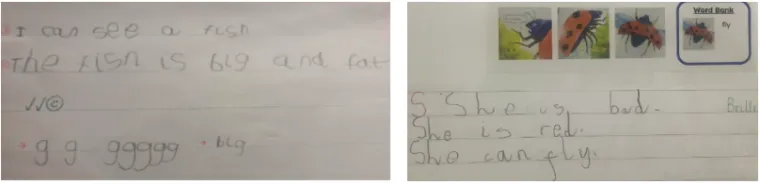
💬 📝 Uniting Composition and Transcription
When a child's transcription skills begin to flow, the two parts of writing—composition and transcription—finally unite.
The true magic happens when the two skills unite: composition seamlessly merges with automatic transcription. The child is now free to leverage the full power of their pre-planned, orally composed ideas, translating them into written form without the barrier of technical struggle. By making this investment in foundational mechanics now, we ensure we are not impeding their writing development, but rather turbo-charging it for the future.
If you would like to explore the WISE Academies writing strategy in greater detail, please join our webinar: ‘Unlock Early Writing Success: A Practical Approach with WISE Academies’. The session takes place on Wednesday 14th January 3:30 pm - 5:00 pm. Further details and booking information are available here.
Further Reading List 📚
This reading list compiles the key guidance documents and foundational research models that support the explicit teaching of oral composition discussed in this blog.
- Department for Education (DfE). (2025) The Writing Framework (Non-Statutory Guidance).
- Source: The writing framework - GOV.UK
- Ofsted. (2024) Strong foundations in the first years of school.
- Education Endowment Foundation (EEF). Early Years Evidence Store: Physical Development