
Looking to spark creativity and deepen learning through loose parts play?
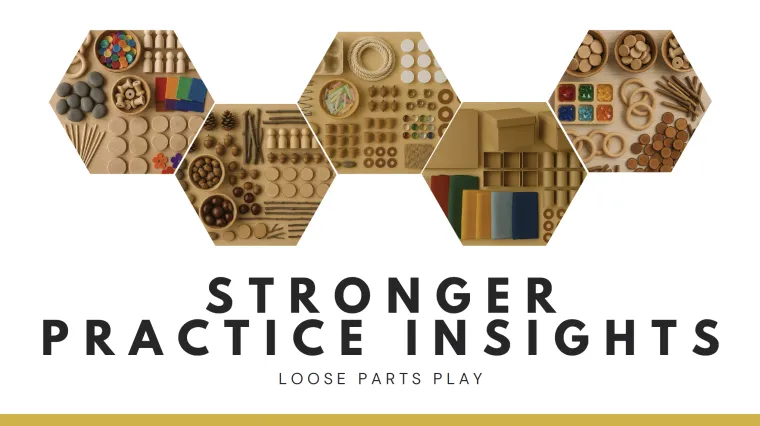
What is loose parts play?
Loose parts play is a wonderfully open-ended approach to childhood learning and creativity. It’s all about giving children access to a variety of materials, natural or man-made, that they can move, combine, redesign, and experiment with in countless ways.
There’s no “right” way to use them, which is exactly the point. Educators use them to spark creativity, deepen learning, and support holistic development.
The theory behind it
The concept was popularised by architect Simon Nicholson in the 1970s. He believed that the richness of an environment, its “variables”, directly affect creativity.
Inspired by this, Nicholson championed loose parts in early education, seeing them as essential tools for nurturing future designers, builders, and thinkers through open-ended, hands-on play.
Simon Nicholson’s 1971 article “How Not to Cheat Children: The Theory of Loose Parts” is a passionate and provocative call to rethink how we design environments for children, and for creativity more broadly.
This resource brings together materials from Stronger Practice Hubs across the country, as well as links to research and online resources—curated to support early years educators with planning, reflection, and professional dialogue.