

Introduction
At the Great North Early Years Stronger Practice Hub, we are acutely aware of the increasing demand for specialised SEND support across our region. We understand that practitioners are navigating more complex needs than ever before. In direct response to feedback from settings, we launched a new initiative in January 2026: Funded, bespoke SEND support. This offer is designed to move beyond traditional training by placing experts directly into settings to provide tailored, practical solutions that upskill educators to effectively meet the needs of the children in their setting. The bespoke SEND support is delivered by our strategic partner Abi McCarthy from the Fusion Learning Team at Cleaswell Hill Specialist School. The following case study illustrates the impact of this support at one of the schools in our home area of Northumberland.
THE CHALLENGE
School X identified a need to refine their approach for two specific children with extremely complex needs in their Reception cohort. While the school had established routines, leadership wanted to move beyond generic professional development to ensure the best possible outcomes for these learners. Specifically, they requested support to develop targeted strategies for speech, language, and communication. They also needed help designing a bespoke timetable tailored to meet the children's individual needs and maximise all learning opportunities. Ultimately, they required specialist, on-the-ground expertise to bridge the gap between theory and the daily realities of their classroom environment, aiming to better support the children's self-regulation, communication and overall engagement.
THE SOLUTION: OUR BESPOKE SEND SUPPORT OFFER
To address these needs, the school requested our funded bespoke SEND support. Central to this offer is our strategic partner, Abi McCarthy. Through this partnership, Abi works directly alongside the school team to provide practical, actionable support grounded in early years pedagogy. The intervention was delivered in two distinct phases:
Phase One: The Deep Dive & Expert Guidance
Abi spent a full day at the school conducting focused observations of the children, assessing the physical setting, and reviewing existing routines and daily schedules. During this phase, Abi utilised her specialist expertise to provide immediate, tailored advice, including:
- Strategy & Timetable Review: Identifying what was working, where specific gaps existed, and how to restructure the day into a bespoke timetable that maximised opportunities for interaction and reduced cognitive overload.
- Tailored Recommendations: Expert advice on new strategies and high-quality resources suited to individual communication needs. For example, implementing Attention Autism principles, an evidence-based approach designed to build shared attention and early communication skills.
- Training Pathways: Advice on future staff CPD, such as Total Communication, the Hub’s Online Inclusive Network to further embed speech and language strategies and the EEF’s Evidence Store for Self-Regulation and Executive Function.
Phase Two: Implementation & Coaching
Two weeks later, Abi returned to further support the implementation of her recommendations through:
- Peer Coaching: Real-time guidance to build staff confidence in managing complex needs and facilitating communication throughout the new timetable.
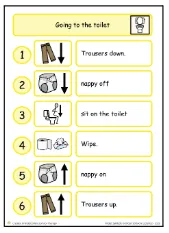
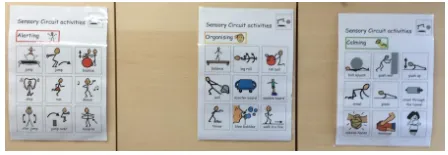
- Practical Modelling: Demonstrating specialist techniques directly within the classroom setting. This included modelling Sensory Circuits to support physical development and ensure children were in an optimal state for learning, directly aligning with EYFS principles for enabling environments.
- Creating Resources: Abi supported staff to create high quality visual resources linked to the children’s targets and areas of need, e.g. visuals to support toilet training.
THE IMPACT
The intervention led to an immediate shift in both staff confidence and the physical learning environment. By moving from theory to high-impact practice, the school achieved:
- Resource Evolution: Evolving ‘Now and Next’ boards using high-quality Widgit resources to support the new bespoke timetable and reduce learner anxiety during transitions. Quantitatively, transitions that previously took up to 10 minutes and involved significant distress have now been reduced to under 1 minutes.
- Environmental Change: The creation of a dedicated Sensory Circuit Room, equipped with visual lists and Widgit symbols of different activities.
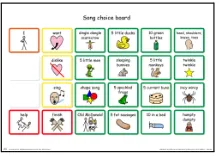
- Outcomes for Children: The newly implemented communication tools and bespoke timetables have directly supported the children’s Communication and Language (C&L) and Personal, Social and Emotional Development (PSED) within the EYFS framework. This has given them strength-based strategies to successfully self-regulate and engage with their peers.
- Staff Empowerment: Real-time modelling gave the team the skill set to improve their current techniques and grow their professional confidence, showing clear qualitative growth in collaboration.
THE "SO WHAT?": LONG-TERM IMPACT
This intervention matters because it moves beyond temporary, surface-level fixes; it lays a foundation for long-term engagement in learning. For the children involved, the tailored environmental changes, focused communication strategies, and bespoke timetables mean they can access the curriculum with significantly reduced anxiety. For the practitioners, the impact is highly sustainable. The Reception team is now equipped with the practical pedagogy to maintain these strategies and plans to cascade this knowledge to the wider setting staff, ensuring these quality improvement aims are permanently embedded into the school's inclusive culture.
FROM THE FRONTLINE
"Our team highly valued the bespoke SEND support from the Fusion Learning team at Cleaswell Hill and completely transformed our SEND provision. Unlike generic training, this was deeply personalised to our specific children. Abi celebrated our existing strengths and helped further strengthen them. She modelled techniques which massively empowered our staff and gave them the confidence to improve our current techniques. This has been the most useful SEN training we’ve received to date." — Early Years Lead & Class Teacher, School X