

About the Author: Katrina Di Girolami is the Great North Early Years Stronger Practice Hub Lead. With over 18 years of experience in Early Years education, she is passionate about using evidence-informed practice to improve school readiness and physical development outcomes for all children.
We often think of ‘school readiness’ as knowing how to write a name or count to ten. But as Early Years educators, we know the reality is far more physical. Before a child can hold a pencil, they need the core strength to sit upright. Before they can read a book, they need the physical regulation to focus.
The latest research paints a worrying picture of physical decline in our youngest children, but it also offers a clear path forward. Here is why we need to prioritise physical exercise in the Early Years, backed by the latest evidence.
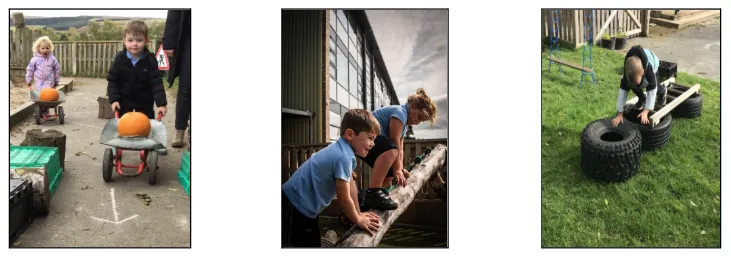
The Current Landscape: A Crisis of Movement
The 2025 School Readiness Survey by Kindred² reveals that the physical baseline of children entering Reception is declining. Teachers report that 37% of children are not school ready, and a reduction in physical skills are a major contributor.
- Core Strength & Regulation: Teachers report that a staggering 44% of children are unable to sit still, a fundamental skill required for classroom learning.
- Fine Motor Struggles: Teachers report that 35% of children struggle to hold a pencil or crayon. This isn't just about hand strength; it is often linked to a lack of gross motor stability (shoulder and core strength).
- Independence: Teachers report that 35% cannot dress on their own and 26% are not toilet trained, skills that rely heavily on physical coordination and body awareness.
- Electronic Devices: 52% of Primary school staff attribute children’s use of electronic devices as the single biggest factor impacting on school readiness.
The Evidence: Why Movement Matters
Research from the Education Endowment Foundation (EEF) underscores that physical development is about far more than being active, it is the foundation for cognitive and social success.
According to the EEF’s Evidence Store for Physical Development:
- Brain Connectivity: "Movements that involve coordinating both sides of the body (such as crawling or skipping) aid brain connectivity, which supports speech, communication, and literacy skills".
- Self-Regulation: There is a strong link between physical development and executive function. "Physical development is related to other aspects of child development... For example, there is evidence that persistence and attention are associated with physical development".
- Cognitive Boost: The EEF’s Early Years Toolkit highlights that implementing recommended physical development approaches can have a positive impact on children's cognitive outcomes, potentially equating to +5 months' progress.
- Holistic Development: "Fine motor development encompasses hand muscle strength, wrist movement, and pincer control: skills which facilitate independence in daily tasks such as eating, dressing, and mark-making".
Putting it into Practice: An Active Curriculum
To help reverse the trends seen in the School Readiness Survey, we need to integrate more movement into every part of the day. It is not enough to just "let them play"; the EEF suggests educators can "aim to improve physical development by explicitly teaching and consolidating movement and handling skills".
Here are five ways our lead school embeds high-quality physical development:
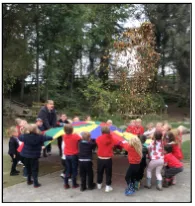
1. Gross Motor Entry Routines
Instead of a passive self-registration, we make the morning arrival active, e.g. gross motor exercises, dough disco, parachute games,, heavy work, bubbles or an ‘active walk’ in (a simple trail using chalk or floor markings that children must follow to get to the carpet e.g. hopscotch, walking along a taped line to build balance, or jumping over ‘puddles’).
2. Maximise the Outdoor Area
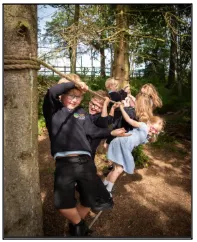
The outdoors is vital in physical development. We have regular, daily access and we have incorporated equipment to support hanging (tree ropes, rope swings, monkey bars, trapeze rings) to build shoulder pivot strength—essential for later writing skills. We also ensure the children access uneven terrain as navigating these surfaces builds the core stability that 44% of children are currently lacking.
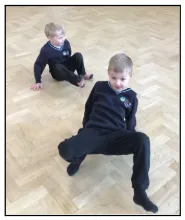
3. PE Sessions Focused on Fundamentals
We use directed PE time to explicitly teach the ‘ABCs’ of movement: Agility, Balance, and Coordination. We dedicate elements of the sessions to developing core strength (to build the muscles needed to sit at a desk) and cross-lateral movements (to fire up brain connections).
4. Movement Breaks Between Sessions
We combat the ‘sedentary slide’ with frequent, short bursts of activity in between learning, e.g. ‘wake up, shake up’ and sensory circuits.
5. Incorporate movement into Lessons
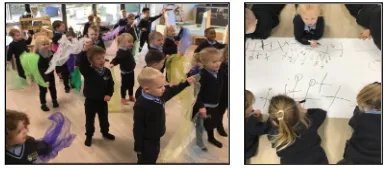
We incorporate movement into our lessons, e.g. number rocket counting in maths, using ‘flipper flappers’ for gross motor movements then recreating these on paper and acting out stories.
By prioritising physical development, we aren't just making children fitter; we are building the neural pathways and physical stability they need to succeed in school and beyond. Let’s get moving!
💭 Reflection Time: Which of these five movement strategies could you introduce in your setting tomorrow?
References
- Education Endowment Foundation (EEF). (n.d.).Early Years Evidence Store: Physical Development. Available at: EEF Early Years Evidence Store: Physical Development
- Education Endowment Foundation (EEF). (n.d.). Early Years Toolkit. Available at: https://educationendowmentfoundation.org.uk/early-years/toolkit
- Kindred². (2025). School Readiness Survey. Kindred Squared. Available at: https://kindredsquared.org.uk/wp-content/uploads/2026/01/School-Readiness-Survey-January-2026-Kindred-Squared.pdf