
“More Than Just Picky Eating”: Food and Nutrition in Children with Restricted Diets
By Abi McCarthy, Rachael Howitt & Abby Tolley — Cleaswell Hill School
Effective September 1st, 2025, the updated Early Years Statutory Framework (section 3.62) mandates that all meals, snacks, and drinks provided to children must be healthy, balanced, and nutritious. To help meet this requirement, providers must now refer to the new Early Years Foundation Stage nutrition guidance This new guidance offers specific insights into supporting children with additional support needs and other special diets. To provide further context on this crucial area, we're joined by Abi McCarthy, Rachael Howitt, and Abby Tolley from Cleaswell Hill Specialist School, who will delve deeper into food and nutrition for children with restricted diets.
Have you ever wondered why some children refuse to eat certain foods, no matter how much encouragement or incentive you offer? In early years settings, it’s common to encounter children with restricted eating patterns. But for some children, food challenges go far beyond fussiness. These are deeply rooted in sensory experiences, anxiety, and the need for predictability - especially for neurodivergent pupils.
As educators, we play a vital role in creating environments where children feel safe and included - not just in the classroom, but at the lunch table too.
In Cleaswell Hill School, we see this daily - children grappling with restrictive eating patterns due to a wide range of reasons. This blog shares insights and strategies from our practice, grounded in evidence and experience, to help schools better understand and support children with restricted diets.
What Is a Restricted Diet — and What Is It Not?
A restricted diet refers to any situation where a child limits the type or amount of food they eat. While this is common in early development, particularly toddlers, it can persist or become more severe for other children due to:
- Sensory sensitivities (to textures, tastes, smells, or temperatures)
- Fear of new foods (neophobia)
- Cognitive preferences (e.g., the need for sameness)
- Health conditions (e.g., allergies, intolerances)
- Cultural or familial dietary practices
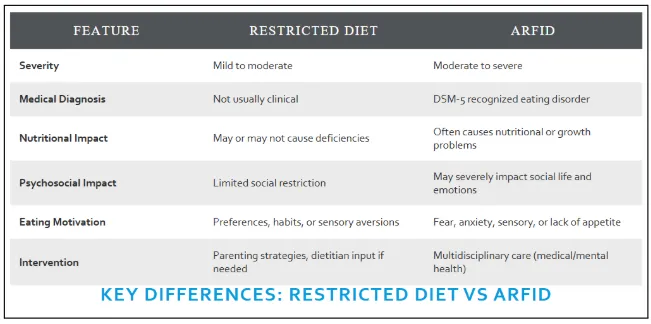
In more complex cases, food restriction may develop into Avoidant/Restrictive Food Intake Disorder (ARFID) - a DSM-5 recognised eating disorder, diagnosed by a medical professional. Unlike a typical restricted diet, ARFID often causes significant nutritional deficiencies, growth issues, or interference with psycho-social functioning. Educators are not expected to diagnose ARFID, but recognising when a pattern becomes concerning is essential for early intervention.
The Links Between Food, Anxiety, and Neurodivergence
In our setting, many of the children experiencing restricted eating are autistic. We must remember that children can often have a number of co-occurring differences and conditions. For these children, food represents more than nutrition - it can be a source of anxiety due to:
- Predictability needs: If food looks different or is prepared differently, it may no longer feel safe.
- Associative memories: A previous illness after eating a certain food can create long-term aversions.
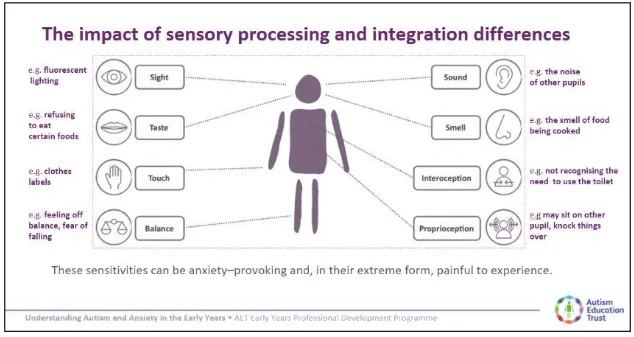
- Sensory overload: Smells, textures, or sounds associated with eating can be distressing.
Recognising these links allows educators to approach food challenges with empathy and understanding.
Why Food Can Feel ‘Wrong’
For many children, eating is not just about hunger. It involves a multi-sensory experience that can easily become overwhelming.
Imagine:
- A lunchroom that’s too loud, bright, or chaotic.
- A texture that causes gagging (e.g., mushy pasta or slimy fruit).
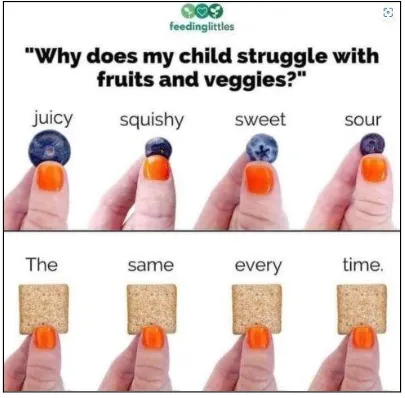
- A sandwich that “looks different” today and suddenly feels unsafe.
Even small changes like mixing sauce into pasta instead of serving it separately can trigger distress. What might seem like “refusal” is often a child's way of communicating discomfort.
A Tiered Approach: What Schools Can Do
In our school, we use a graduated response to create inclusive, food-friendly environments. Here's how early years settings can apply these principles:
🌍 Universal Support (For All Children)
- Foster a whole-setting ethos of non-judgemental inclusion around eating differences.
- Embed food experiences into the curriculum.
- Establish calm, predictable routines at mealtimes.
- Embrace visual supports (e.g., picture menus, consistent routines).
- Make space for flexible eating locations—some children may prefer a quieter corner or “tent.”
- Accept food quirks: allow different cutlery, separate foods, or preferred food shapes.
- Work closely with parents/carers: Share concerns and strategies collaboratively.
- Support independence: Allow children to prepare and serve food themselves.
🎯 Targeted Support (When Challenges Arise)
- Use food diaries and sensory checklists to understand patterns and preferences.
- Develop personalised food plans: include likes, dislikes, sensory accommodations, and small goals.
- Have “safe” food available in the classroom for children to graze on.
- Try creative ideas like:
- Themed meals based on favourite stories (e.g. a caterpillar-shaped platter from The Very Hungry Caterpillar).
- Play-based food exploration (no pressure to eat - just touch and talk).
- Social stories explaining why we eat and how food helps us grow and play.
- Presenting food in different ways, e.g. afternoon tea-themed picnics.
- Celebrate progress: Small victories deserve recognition.
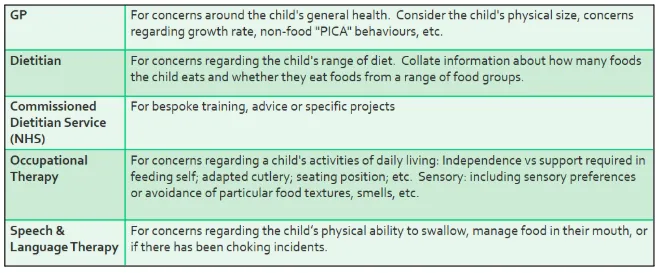
🧠 Specialist Support (Know When to Refer)
When challenges persist or escalate, don’t hesitate to work in partnership with professionals and parents to support the child:
Final Thoughts: Your Role Matters
🍎 Food refusal is communication, not bad behaviour. Listen, observe, support — and don’t be afraid to seek specialist help when needed.
🧠 Predictability and autonomy reduce anxiety around eating.
💬 Family collaboration is key - share, listen, plan together.
🧩 Track change through comfort and confidence, not just consumption.
🧰 Your toolkit matters: Visuals, routine, creativity, and kindness.
Educators are uniquely placed to spot early signs of food-related difficulties and play a pivotal role in building a supportive environment.
Reflect on your setting today
- Are children with eating difficulties included and supported at every stage?
Are your policies, practices, and curriculum inclusive of neurodiverse needs around food?
Let’s Feed Minds, Not Just Bodies
True inclusion means recognising that every child’s relationship with food is personal. For some, every bite is a milestone. So, let’s create mealtimes that are as welcoming and supportive as our classrooms—where every child is seen, heard, and supported.
Let’s feed their minds with empathy and their bodies with care.
Further Resources
- SOS Approach to Feeding – Free Parent Workshop
- PEACE Pathway – Eating Disorders Support
- EEF Early Years Toolkit
- Autism Education Trust CPD
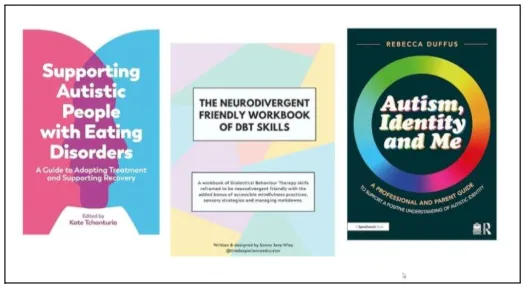
- Supporting autistic people with eating difficulties
- Eating disorders - Transformation Partners in Health and Care
- Eating disorders | Oxford Health CAMHS
- ARFID Awareness UK