
The Art of Conversation….with 3-4 Year Olds
Nichola Hesslewood, Deputy Headteacher, Wingate Community Nursery School
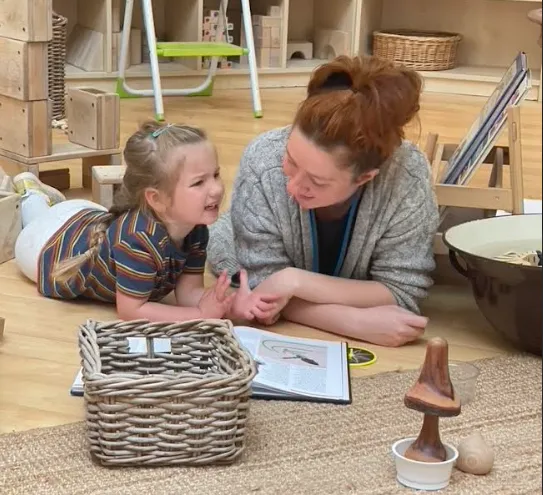
Have you ever stopped to wonder about that phrase ‘The art of conversation’? What is it about conversation that makes it so complex and creative that we sometimes refer to it as an art? And how do we support our youngest learners to understand these complex exchanges – and ultimately, participate in them?
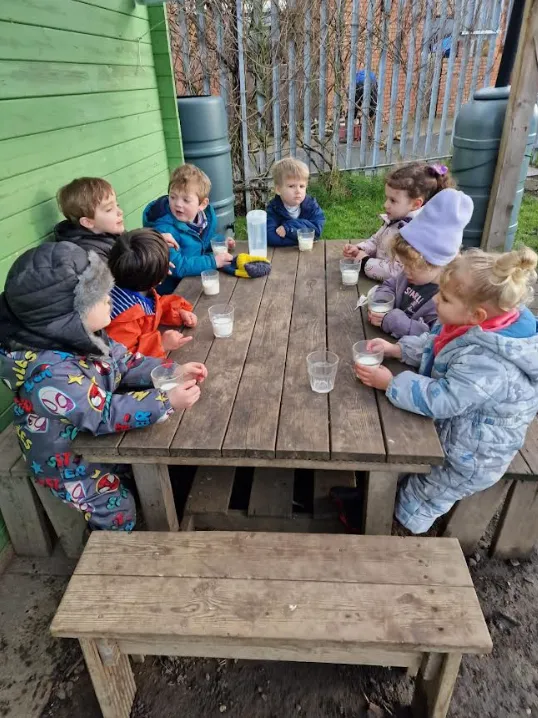
At Wingate Nursery School, our daily routine includes regular time for conversation in small groups. Each day begins with a ‘family group time’ that focuses on children’s plans for the day ahead. After they have had time to play and to work on their plans, the groups gather back again for a catch-up; another conversation focusing on how it went, what each of us learnt that day, what further work might be needed – we call this approach Plan, Do, Review.
What is crucial for us about our family group times is that they are a conversation. As young children embark on their journey to becoming effective communicators, if our wish for them is that they become natural communicators - able to understand and contribute towards meaningful discussion and debate - then they need examples of meaningful, successful and engaging conversations and crucially, they need to be part of them.
If we want to achieve these natural, real-life conversations then somehow, we must resist the temptation of ‘delivering’ a group time based around activities, teacher-led quizzing and children taking it in turns to speak around a circle. Somehow, we need to move towards a conversation where children speak directly to one another, become less reliant on a dominant adult and respond to – and sometimes ask - real questions that provoke real thinking.
For children who have had vast experience of real-life conversation, who have grown up immersed in conversation, their ability to participate in these group time discussions grows steadily and naturally. They slowly learn to stay on-topic and to follow on from what the previous child has said. For other children however, this complex art form can be extremely difficult to navigate and, alongside modelling and opportunities to participate, they may need some direct teaching of the skills and strategies that adults use to conduct complex group conversations.
So, how on earth do we achieve all of this? In 2023/2024 we worked with the Education Endowment Foundation to unpick exactly what our educators are doing to facilitate this kind of discussion. We scrutinised our Plan, Do, Review approach and developed it into something that could be shared and replicated with other settings.
Our work compliments growing evidence from the EEF Early Years Evidence Store in terms of ‘teaching through collaborative talk’ - EEF | Communication and Language
We eventually uncovered 7 key ingredients that are present in the very highest quality conversations with children – and we captured real footage of our educators using these key ingredients, so that we could share this approach with others. Alongside these ‘key ingredients’, group time conversations need to be full of joy, have genuine and meaningful subject matter and be scaffolded by adults who are eager to nurture each child’s conversational skills and communication development – rather than dominating the talk with their own preconceived ideas and group time plans.
If you are interested in finding out more about the Key Ingredients for Plan, Do , Review and possible future opportunities to learn about the approach, then please contact me directly at [email protected].
Further Reading
Interacting or Interfering? Improving Interactions in the Early Years by Julie Fisher (Open University Press)
All about...quality interactions (Nursery World article from 27th November 2024)