
Part Two – Physical Development
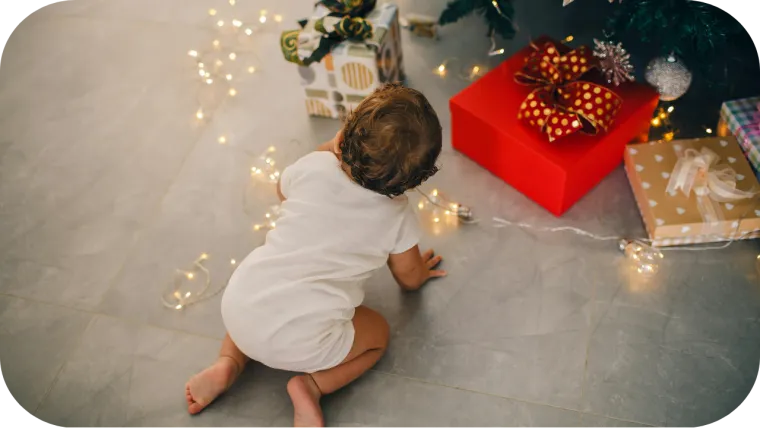
In my previous blog, we explored babies’ Personal, Social and Emotional Development and how early relationships help them feel secure and ready to learn. This time, we turn to Physical Development: another prime area, and one that brings remarkable changes during the first year of life.
Think about the effort involved in a baby lifting their head, reaching for a familiar face or moving towards a favourite toy. These small moments are easy to overlook, but each gives babies opportunities to explore what their bodies can do.
The Education Endowment Foundation (EEF) describes physical development as involving the growing body and brain, including strength, balance, coordination, sensory development and movement skills. It provides foundations for children’s later physical abilities and health.
From automatic responses to purposeful movement
At birth, many of a baby’s movements are automatic reflexes. Touch their cheek and they may turn towards it, searching for a feed. Place a finger in their palm and their fingers close around it. When startled, they may spread their arms before drawing them back towards their body: the Moro reflex.
Babies also kick, stretch and move spontaneously. They are active from the beginning, although they have limited control over these movements and still need their head and neck supported.
Over the following months, movement gradually becomes more deliberate. A baby who initially gripped a finger automatically begins reaching for an object they want to explore. They learn to hold it, move it between their hands and eventually let it go intentionally.
Why these early movements matter?
These responses do not predict how well a child will later walk or write. However, everyday movement and play give babies opportunities to develop the strength, balance and coordination they will use as their abilities grow. Exploring objects also helps develop the hand control needed for later activities, including feeding themselves, drawing and writing.
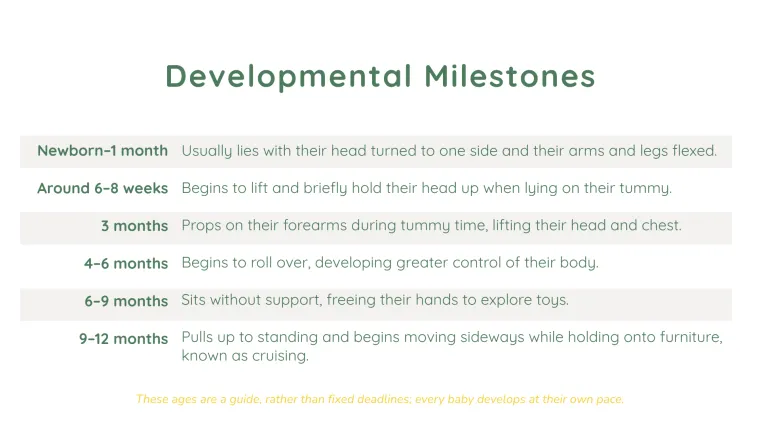
Across the first year, we typically see increasing head control, reaching, rolling and sitting. Many babies then find ways to move around, pull themselves up and cruise along furniture; some begin taking independent steps. Hand movements develop alongside this, becoming increasingly precise.
These milestones help us notice progress, but they should not become a timetable we expect every baby to follow exactly. Babies vary in their pace and ways of moving, and some do not crawl. Our role is to observe carefully, provide safe opportunities to practise and respond to individual needs, seeking advice when concerns arise.
What can we do to best support babies in our settings in their first year?
- Provide daily floor play: Give babies safe, comfortable space to stretch, kick and explore, limiting time in seats and bouncers.
- Offer supervised tummy time: Start with short, frequent periods while babies are awake, gradually increasing as they become comfortable.
- Encourage head movements: Get down to babies’ level and use your face, voice or an interesting toy to encourage looking and turning.
- Support reaching and rolling: Place toys within an achievable distance, allowing babies time to make their own attempts.
- Develop hand control: Offer objects of different shapes, sizes and textures to grasp, transfer and release. All resources must be suitable for babies and large enough to prevent choking.
- Support sitting when babies are ready: Stay close and gradually reduce assistance as their balance and control develop.
- Make space for mobility: Provide clear, safe areas for crawling, shuffling and other ways of moving.
- Provide stable supports: Secure furniture can support babies who begin pulling themselves up and cruising.
- Allow freedom of movement: Choose comfortable clothing that does not restrict movement.
- Follow each baby’s pace: Encourage emerging skills without rushing babies into positions or movements they cannot yet manage.
- Balance challenge with reassurance: Allow time to try, offering responsive support when babies become frustrated or need help.
- Work with families: Share observations, discuss progress and seek advice if there are concerns.
- Review safety regularly: Recheck the environment as babies become able to reach, roll and move further.
The DFE guidance on getting it right from the start highlights the importance of practitioners knowledge about early milestones.
Physical development in the first year lays important foundations for children’s future movement, independence and participation in everyday life. Through reaching, grasping, rolling and exploring, babies gradually develop the strength, balance, coordination and body awareness that support later abilities such as walking, dressing, using tools and writing.
Good practice gives babies safe space, freedom to move and varied opportunities to practise, supported by attentive adults who recognise their interests and readiness. By encouraging exploration without rushing development, practitioners help babies build confidence, persistence and increasing control over their bodies, supporting a positive relationship with movement and physical activity as they grow.
Reflect on your practice
Take a look at our guide on things to consider to keep babies safe in your setting.