

Malleable Play
(Click on the PDF at the bottom of the page for our handy printable resource card.)
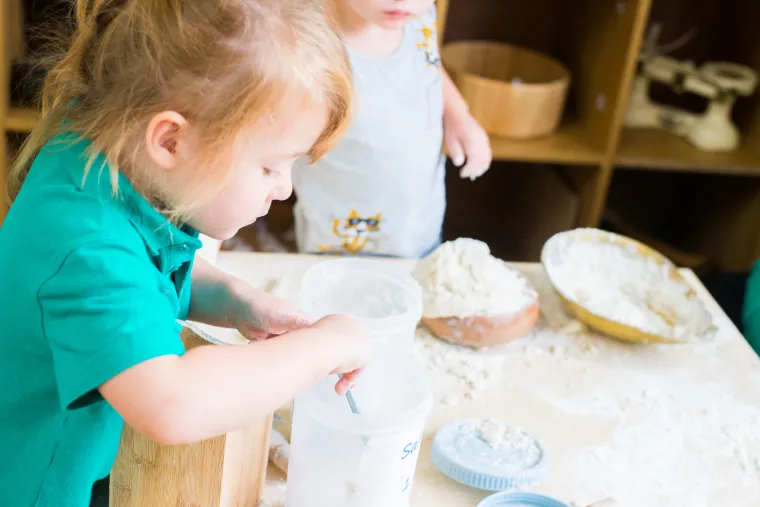
Using malleable materials to support Communication, Language and Physical development.
A malleable material is something that can easily be manipulated. They can be squeezed, shaped, rolled, poured, cut or combined with other materials to create new textures - with malleable materials, the possibilities are endless! Malleable materials can include all sorts of things but often we think of playdough, gloop, sand, mud and water.
Malleable materials allow children to:
- Use all their senses to explore different textures.
- Be independent and experiment when making their own malleable materials
- Expand their vocabulary using descriptive words (modelled by the practitioner)
- Develop their hand-eye control.
- Develop their fine motor control and muscles needed later for writing.
Ideas on how to use malleable materials to support children’s learning & Development:
- Extend children’s vocabulary talking about textures, smells, actions.
- Introduce new vocabulary ‘pouring, dripping, smooth, more, less’
- Encourage children to make their own playdough and measure the ingredients (use scoops) this offers lots of opportunities for investigation whilst they hone their technique.
- Add mark making materials to extend the opportunities for learning – brushes, sticks, feathers.
- Add cookbooks to your provision.
Observe how the children interact with the materials you provide. What could you add to enhance this further? Keep looking back on the children’s adventure with the malleable materials to see how their play develops.
There is strong evidence that teaching and modelling vocabulary to children has a positive effect on their oral language skills.
For more information and examples visit the EEF Evidence Store
Downloads
The Evidence ~ Malleable Materials.pdf
The Evidence Malleable Materials.pdf
(248.98 KB)
The Evidence Store ~ Malleable Materials