

How to support Communication & Language development through interactive reading & collaborative talk
(Click on the PDF at the bottom of the page for our handy printable resource card.)
Evidence shows that the teaching and modelling of vocabulary can have a positive effect on children’s development of oral language.
Through interactive reading, the reader can encourage children to be active participants. Shared book reading supports interactive reading and teaching through collaborative talk.
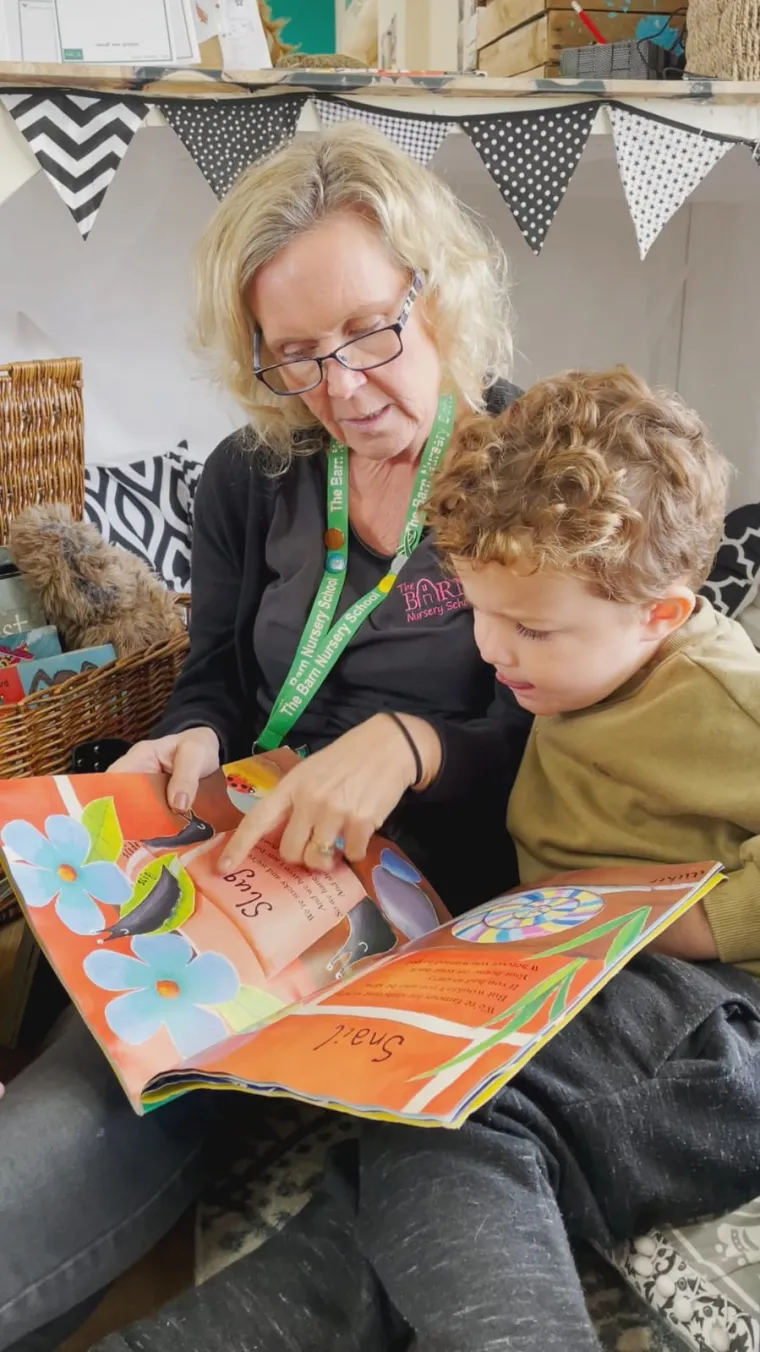
What is interactive reading?
Adults share a story one to one or with a group of children encouraging children to become active participants in ‘reading’ the book through engagement with images, text or questions.
How to support Communication & Language through Interactive Reading
Explaining and showing:
The reader provides information surrounding the story to support the child’s understanding of the spoken word.
When reading the story, the reader could give more information about fish - ‘fish live in water’, ‘they can’t breathe air like we can’.
Questioning:
Use open ended questions giving children the opportunity to use language. (what, where, how, when)
There is strong evidence that interactive reading can be a particularly effective approach to improve language and communication in the early years.
For more information visit The Evidence Store
Downloads
The Evidence ~Interactive Reading.pdf
The Evidence Interactive Reading.pdf
(324.68 KB)
The Evidence Store ~ Interactive Reading