

Anne Denny is the Chief Executive of Bows & Arrows, which operates seven nurseries in Suffolk, and a partner in the East of England Early Years Stronger Practice Hub.
With the introduction of government funding for under twos in September 2024, the need for skilled caregivers, implementation of evidence-based curriculums, and creation of safe, stimulating spaces is essential for the cognitive, social, and emotional growth of babies. But how do we put this into practice, what are the key considerations, and what makes a good baby practitioner?
A good place to start is with the baby’s entry into an early years setting as this is arguably the most significant transition a child will make. Due to UK maternity rights, most babies spend their first months at home in the full-time care of the mother, but under new funding entitlements many children from 9 months old will be attending an early years setting for 30 hours a week. This is a massive transition and so we have a responsibility to handle it well. At Bows and Arrows this involves a nursery visit, a home visit and several settling in sessions, as well as dedicated time spent with the family. This is an opportunity to ask all the usual questions about routines and what makes each child unique, but this process also enables a bond to develop between the key person and the baby, so they develop a secure attachment as quickly as possible. It also builds a trusting and respectful relationship with the parents:
During the home visit the key person will ask about the “firsts”, does the parent want to know if the baby has their “first step” or “first word” at nursery, or would they prefer not to know, so they can have this experience at home?
Another consideration is the amount of time a baby spends in the early years setting as some babies struggle to form emotional attachments with infrequent attendance, it might help to specifying a minimum amount of sessions or hours for children to attend in a week. In larger settings, staggered admissions are beneficial, so practitioners are not trying to settle multiple babies at once.
When looking at the evidence, Ofsted’s “Best Start in Life: A Research Review for Early Years” draws on research to inform good practice. When it comes to physical development, babies need the space and time to practise and refine their physical skills. The review states:
“The NHS recommends that infants have opportunities for tummy time from birth, gradually increasing the amount day by day. However, research indicates that only approximately 30% of babies have this. Some children may spend too long in ‘containers’, such as pushchairs, bouncers or car seats, these inhibit young children’s movement.”
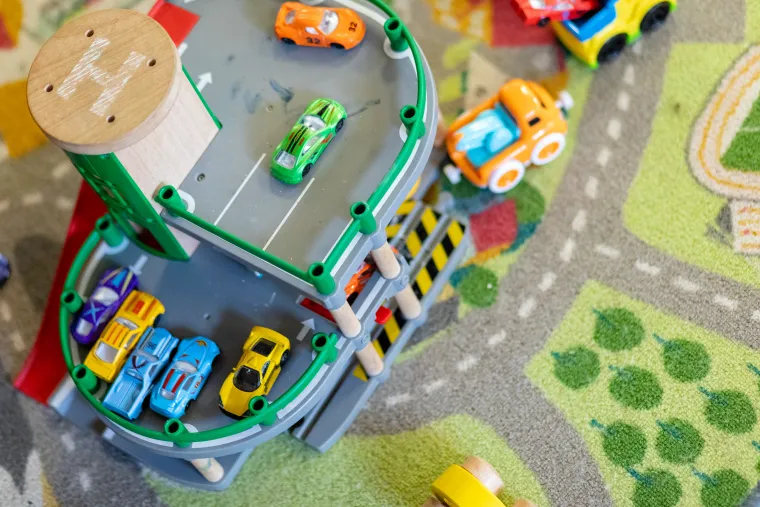
Early years settings can provide babies with ample opportunities for physical interactions with the world around them. Low level furniture supports the “cruising” stage before walking when babies hold on to develop strength, balance and coordination. A movement play area can help with self-initiated body movement such as twisting, turning and rolling.
For baby practitioners, it’s the interactions that matter.
“Well before they start learning to speak, babies communicate with their parents or carers through eye contact, crying, cooing, smiling and making gestures such as pointing and waving. Early back-and-forth interactions with responsive adults helps meet children’s physical, psychological and social needs”
Best Start in Life Part 2: The Prime Areas of Learning 2023
Sounds simple but it takes a special person to work with babies! At Bows and Arrows, we look for practitioners who are “attuned” to babies as a good practitioner will be exceptionally skilled at recognising babies cues and will respond in a respectful, calm and attentive manner.