

The Why
Concerns around physical inactivity, rising childhood obesity, declining mental health, and reduced play opportunities in young children are frequently highlighted across media and public health platforms. Both the World Health Organisation and England’s Chief Medical Officer recommend that children aged 2–5 years engage in at least three hours of physical activity daily, including one hour of high-intensity movement such as running, climbing, or jumping. Despite this, a comprehensive 2018 study found that 91% of children aged 2–4 were not meeting these targets.
Early childhood is a foundational period for cognitive and physical growth. Today’s children have significantly fewer opportunities for independent outdoor play than previous generations, with nearly 500 play spaces lost in England over the last decade. Since the 1970s, unsupervised outdoor play has decreased by 90%, a change that has negatively affected children’s well-being.
Educators play a crucial role in reversing this trend. Providing varied play environments—from forest school areas to block play corners—combined with adult scaffolding supports a wide range of developmental outcomes. Play encourages communication, collaboration, problem-solving, and imagination.
Recently, I facilitated a pirate-themed movement session for a Reception class. Using wall bars and gym equipment as a "pirate ship" (and themed music) children engaged in climbing, balancing, and navigating obstacles. Their creativity was sparked, and the stories continued into classroom literacy activities. In just 50 minutes, the children practiced physical skills, social negotiation, and imaginative play—all key elements of a rich developmental experience.
Fundamental Movement Skills (FMS)
FMS are the essential movement patterns developed during early childhood that lay the foundation for more complex motor abilities. They are grouped into three categories:
- Body Management: Stability, agility, control
- Locomotor: Running, hopping, rolling (travelling)
- Object Control: Throwing, catching, kicking
These skills not only support physical proficiency but also contribute to confidence, engagement in learning, and long-term healthy behaviours. Research has shown that early movement interventions can positively impact academic and cognitive outcomes (EEF, 2024)
The Research
Experts advocate for a play-based approach to physical development, which aligns with findings from the Education Endowment Foundation (EEF, 2022) showing that young children can gain up to five months' progress in cognitive development through physical interventions.
Reduced peer interaction, especially during the pandemic, hindered motor development. Play and movement with others are essential for building coordination, confidence, and foundational physical literacy.
Theorists like Piaget recognised the broader benefits of movement—not just physical exertion, but how movement supports the acquisition of knowledge and understanding. In the Early Years Foundation Stage (EYFS), Physical Development is a prime area of learning, interconnected with Communication and Language, and Personal, Social, and Emotional Development.
Provocations for Reflection
🫵🏼 Are physical development opportunities prioritised in your setting?
🫵🏼 Is movement given as much attention as literacy or phonics?
🫵🏼 Do you actively assess movement competence?
🫵🏼 Are children offered varied, dynamic play environments?
Curriculum Considerations
To foster physical development, environments should include:
- Varied indoor/outdoor movement spaces with different surfaces and levels
- Regular and spontaneous opportunities for movement
- Reduced sedentary time (consider removing chairs where possible)
- Access to large apparatus and equipment
- Gross motor experiences that support fine motor skills
- Age-appropriate freedom to explore
- Risky play with natural elements (climbing trees, digging, exploring)
Learning spaces should nurture autonomy, creativity, and independence to enhance children's development and overall happiness.
The How
Children should engage in activities that allow them to develop mastery—skills they can revisit and improve over time, such as climbing, catching, or balancing. Appropriate clothing and safety checks, especially outdoors, are essential to support this.
Ideas to Explore:
- Encourage staff to share physical activities or sports they enjoy with the children
- Develop a physical activity policy that includes outdoor risky play (visit my website for a draft version)
- Create active learning opportunities (e.g. storytelling with movement)
- Provide varied equipment and surfaces
- Remove unnecessary chairs to encourage natural movement
Two Fun, Low-Prep Activities
Sensory Pathway (Indoor or Outdoor)
You’ll need: buckets, tubs, bark, slate, pebbles, bricks, pond liner, etc.
Steps:
- Clear and dig a shallow path
- Let children help transport materials
- Layer different textures and surfaces
- Add water to a lined section
- Walk barefoot and explore the sensations
- (Optional) Decorate with scented plants for a permanent installation
Sock Streamers
You’ll need: socks and music
Steps:
- Give each child a sock (odd ones work great!)
- Put on upbeat music
- Dance with socks—high, low, twirling, stretching
- End by launching the socks and observing their movement
The What
Together with my colleague Brianne Pearson, we created the Physical Activity Adventure Pack (PAAP)—a movement-based scheme aligned with the EYFS and Development Matters (2021). It includes:
6 Thematic Units:
- Fundamental Movement Skills – Navigating Space
- Movement and Dance
- Agility, Balance & Coordination
- Gymnastics
- Multi-skills – Hand-Eye & Hand-Foot Coordination
- Athletics
Each unit is supported by six themed activity cards featuring:
- A warm-up, main, and closing activity
- Physical development and wider EYFS links
- Key teaching points
- Required equipment
- Themed vocabulary
- Creative and imaginative play elements
For more information, please contact [email protected] or call 07929324965.
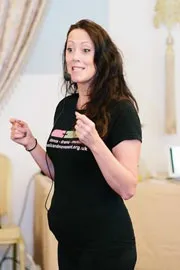
This blog was written by Helen Battelley MA
Helen is an internationally renowned consultant, trainer, author and speaker in Physical activity/movement playin Early Education with an MA in Early Childhood Studies (Physical Activity and Movement). Her training style is energetic, passionate and highly motivational. Helen is respected globally for her valued contribution to raising the profile of early years physical activity and reducing sedentary behaviours.
Helen is chair of the national early years active start partnership (NEYASP) comprising a wide range of stakeholders in the sector who have extensive experience and expertise in the field of EY PD, sport and movement play. NEYASP are taking positive action to inform and support policy makers and inspection bodies to ensure the sector is taking an evidence-informed approach and valuing the place of physical development in a child’s life, right from the moment they enter the world!
In 2024 Helen was the movement consultant for ‘Animal Movers and Mini Me’ a series for young children on SKY TV. The series will be released on Sky later in 2024. This year also saw the release of the Physical Activity Adventure Pack (PAAP), a scheme of work developed specifically for early years children, drawing on developmentally appropriate practice, movement play and aligned with the DfE’s Early Years Foundation Stage Profile. The scheme was co-created by Helen and Brianne Pearson.
Helen works as a lecturer and trainer, for 4 universities delivering Initial Teacher Training (ITT) modules in Primary PE and Early Childhood PE Pedagogy as well as Early Childhood Physical Development. She is also an approved provider for the UK’s Association for Physical Education (AfPE) and a member of the Chartered Association of Teachers.