

Craig Bolton, Headteacher at East Prescot Road Nursery School explores his school’s approach to Communication and Language, with a particular focus on promoting children’s oracy, narrative and vocabulary skills.
Introduction
East Prescot Road Nursery School is a maintained nursery school (MNS) for 3 and 4 year olds, attracting children and families from in and around Liverpool. The staff team has developed and refined the school’s curriculum offer to prioritise communication and language over many years. The school has Communication Friendly Setting (CFS) status and has also been awarded ‘Ambassador School’ status for its involvement in the NELI Preschool Programme.
Why is Communication and Language such a priority?
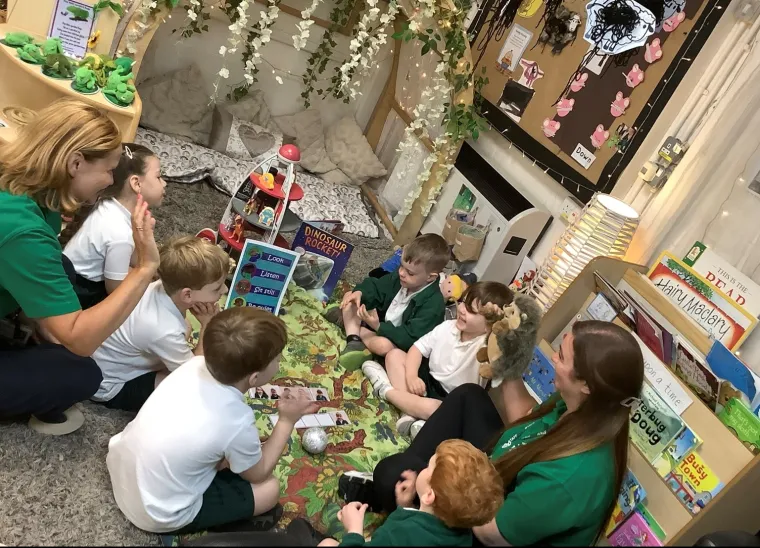
Communication is a basic human right. A child’s ability to communicate effectively through speaking and listening is crucial for development. Oracy supports literacy, social-emotional well-being, and academic success. Children with strong oracy skills express themselves clearly, understand others, and participate actively in learning and social situations. Communication and Language underpins all areas of learning and the child’s sense of self. A child who has not yet developed age-appropriate oracy skills will find every interaction with the world around them that bit more difficult. They won’t have the vocabulary to express emotions, needs or opinions, or to form fulfilling relationships based on shared interests. As early years practitioners, our primary role must be to support our children to become effective communicators.
What works well in our setting?
·Planning for language
Being intentional about language in the Early Years Foundation Stage (EYFS) means purposefully planning for specific ‘target vocabulary’ when practitioners interact with children. Practitioners must be clear on the specific words that they want to draw children’s attention to and model these words in sentences.
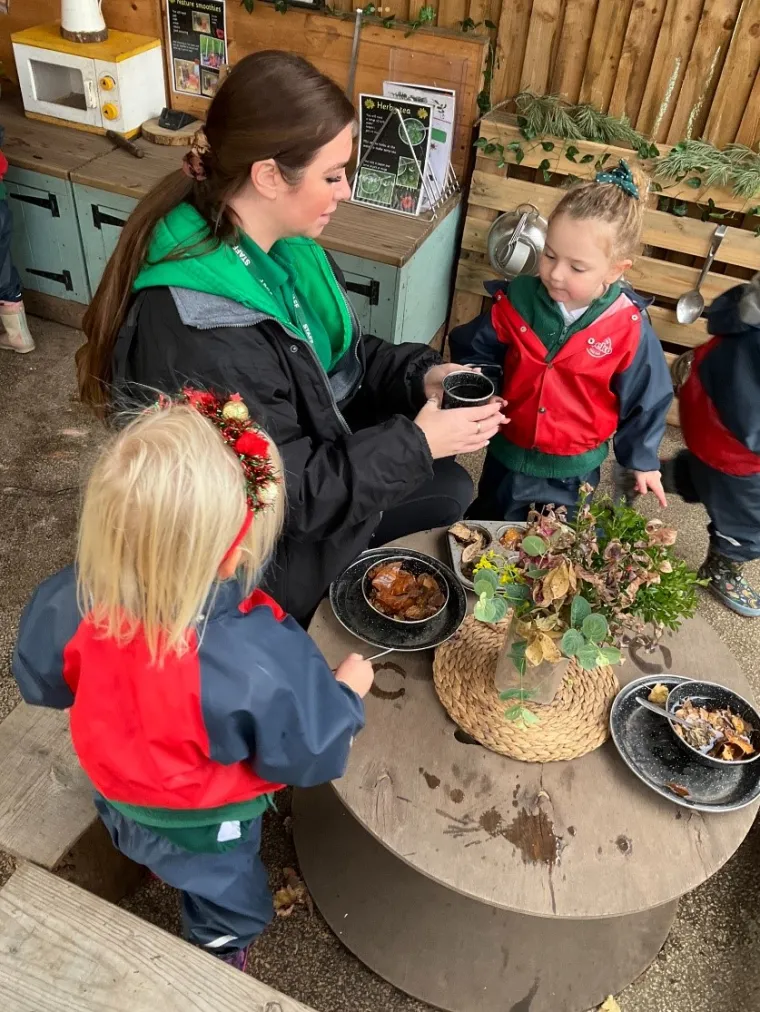
Purposeful planning is vital for ensuring that language opportunities are maximised. This involves planning activities that encourage conversation, introducing novel objects, selecting items that promote curiosity or choosing books that expose children to new language structures and words. Not only is this approach impactful in small group times when children gather together, but throughout the continuous provision, when adults interact with children in the indoor and outdoor environments. Secure practitioner subject knowledge underpins effective interactions by allowing staff tor respond knowledgeably in the moment.
· Making the most of every moment
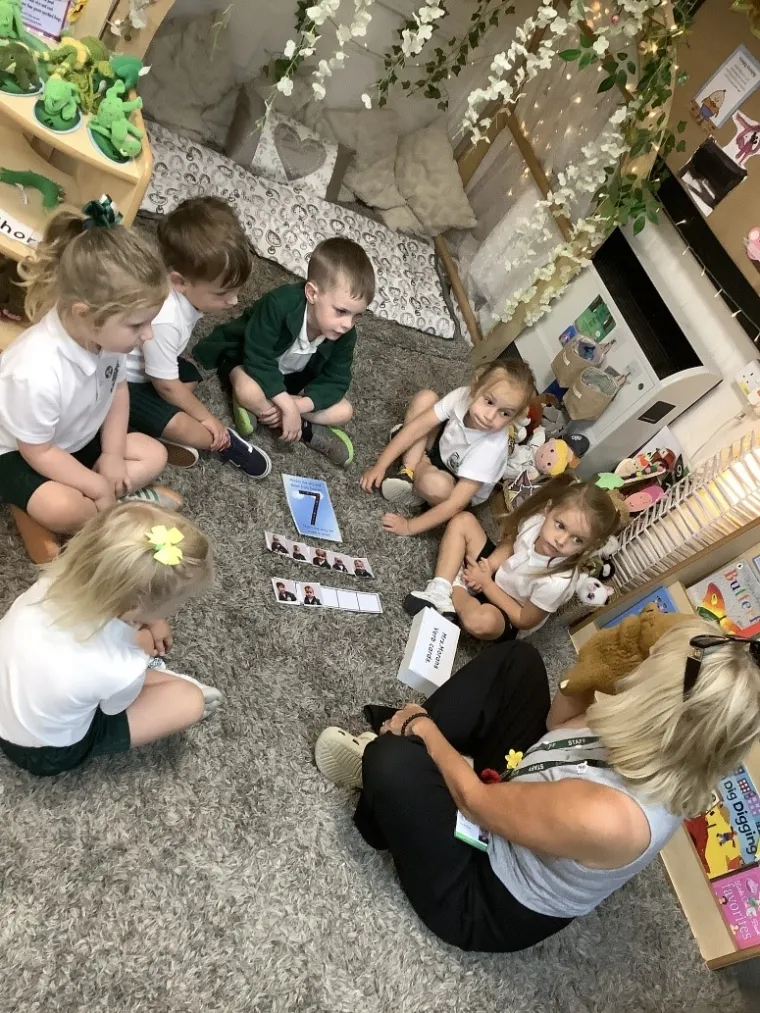
‘Every teachable moment’ is the maxim of any setting intending to increase children’s daily dosage of language. Practitioners must identify every opportunity to add more language, use familiar words in a slightly different context or give children the opportunity to hear different language structures. Practitioners seek out opportunities within daily routines and tasks to teach language in context. Tidy up time, changing times and meal times provide times to each language daily.
· A language-rich environment
Providing access to a wide range of books, toys, and materials that stimulate language, as well as ensuring that adults model and use language effectively, are all key to high quality interactions. Children are unique. Some will communicate more freely in one area and less in others. Boys tend to communicate more freely “on the go” outdoors, or while working on a task, such as a woodwork creation or constructing with block play. The enabling learning environment needs to be responsive to children’s individual preferences and interests and promote their curiosity and exploration.
· Observing and responding
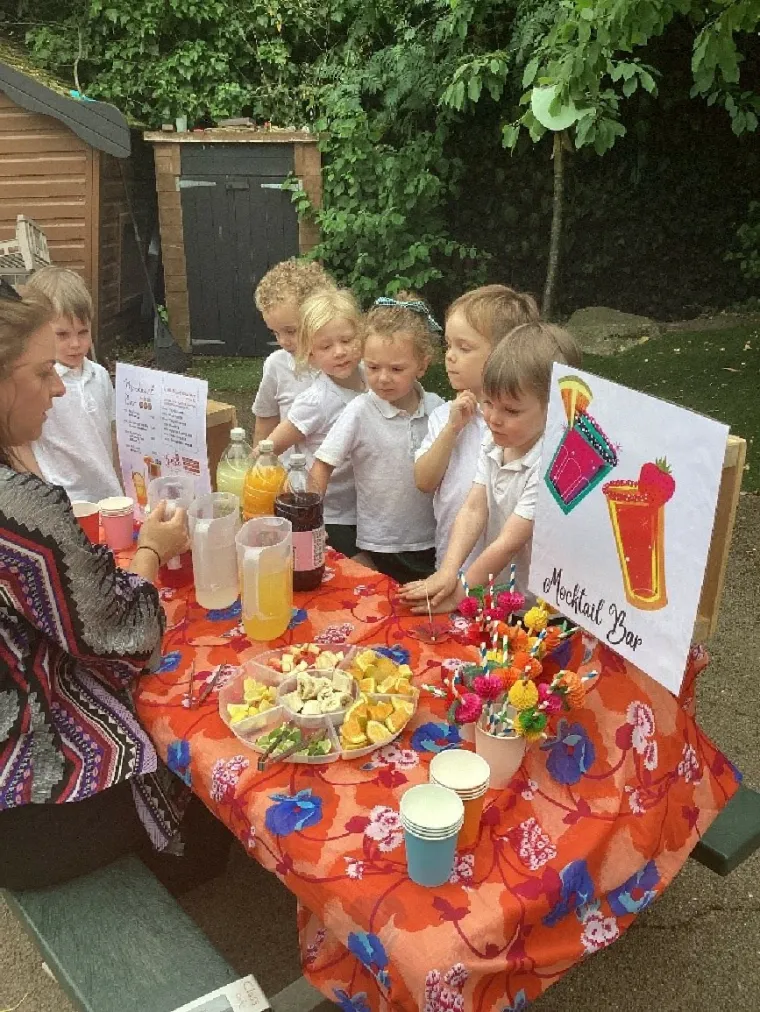
Skilful practitioners observe children's language and respond to their individual needs. This includes paying attention to the words and phrases they use, as well as their non-verbal communication, and responding in ways that encourage further language use. Practitioners need to be clear about which children are able to communicate sociably with familiar and unfamiliar people, as well as being aware of those children who are more reluctant to talk or whose interactions with others are highly focused on the child’s own agenda.
Our setting employs a range of evidence-based tools that help practitioner to build a clear picture of each child in terms of their communication styles and how they use language in different situations and contexts. When observational evidence is then combined with information from language screening and assessment tools, practitioners have a full and comprehensive assessment of a child’s stage of language development and speech language and communication needs.
What intentional strategies promote language and communication?
Talk about What You Are Doing
Narrate your own actions and the actions of the children during play, introducing new vocabulary and sentence structures.
Open-Ended Questions
Instead of asking simple yes/no questions, ask open-ended questions that encourage children to think critically and express their ideas and feelings.
Repetition and Expansion
Repeat and expand on children's utterances, helping them to hear correct grammar and vocabulary in context.
Back-and-Forth Conversations
Encourage children to engage in back-and-forth conversations, even if they are just at the babbling stage. This helps them develop their conversational skills.
Reading Aloud Regularly
Read aloud to children to expose them to new vocabulary, sentence structures, and stories. This can have a significant impact on their language develop.
Dialogic reading
Use dialogic reading for shared book reading. Engage children in a conversation about the book, rather than just reading to them. Focus on actively involving the child through questions and prompts, fostering language development and early literacy skills. Encourage children to become active participants in the reading process, leading to a deeper understanding of the text and improved communication skills.
Sign-Supported Communication
Communicate using a combination of speech, facial expressions, body language, tone of voice, and signs, particularly focusing on key words within a sentence.
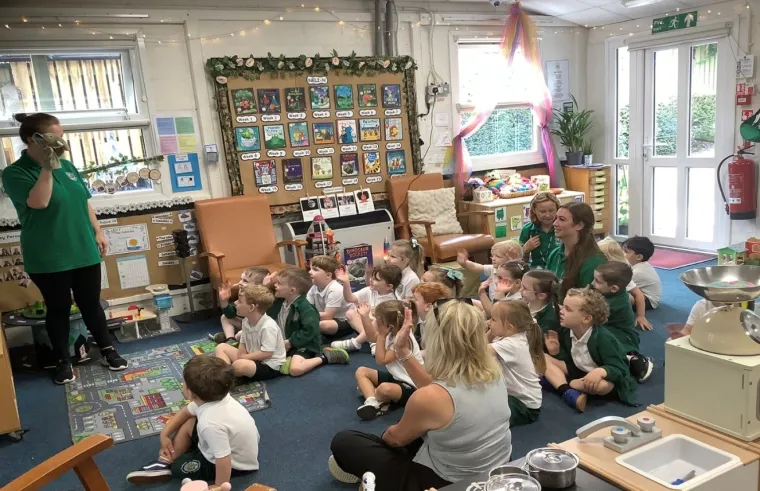
How does ‘NELI Preschool’ support Communication and Language in our setting?
The Nuffield Early Language Intervention for Preschool (NELI Preschool) is central to our school’s universal language offer. The impact of NELI is so powerful because it is a whole-school oral language intervention and enrichment programme, which enables all children, regardless of starting points to make additional progress. This underpins our school’s culture and ethos of securing the very best start in life for all children.
We were able to integrate all aspects of the NELI programme seamlessly into our existing routines. NELI resources, planning and scripted sessions have supported us to deliver highly engaging whole-class and small group learning experiences. NELI Preschool encourages collaboration between practitioners and a shared understanding about the precise vocabulary to be taught each day.
We have integrated NELI Preschool into our curriculum planning, aligning learning intentions and themes to maximise the potential for language learning, linked to the high quality texts which for the bedrock of the programme. This provides our children with a rich and meaningful context in which to learn new words and explore concepts liked to the ‘Special Words’. There has been a hugely positive impact on our continuous provision, with practitioners much clearer about the intended learning and expectations around high quality interactions.
The impact of NELI Preschool on children’s oral language skills has been profoundly positive in terms of children’s narrative skills, confidence and willingness to communicate and expanding their vocabulary. The programme underpins our universal language offer for all children in the setting, ensuring that all children receive a daily dosage of high quality language input. This means that the school can be assured that children are being taught new vocabulary in a systematic and progressive manner. Wider impacts include supporting reluctant communicators, and higher levels of wellbeing and involvement for all children.
Links to further reading:
https://oxedandassessment.com/uk/neli-preschool/
https://www.elklan.co.uk/Training/Settings/CFSe/
https://educationendowmentfoundation.org.uk/early-years/evidence-store/communication-and-language
https://speechandlanguage.org.uk/educators-and-professionals/programmes-for-nurseries-and-schools/