

Written by Gemma Callaghan Headteacher
Introduction
The Early Years Educational programme for math’s states that
Developing a strong grounding in number is essential so that all children develop the necessary building blocks to excel mathematically. Children should be able to count confidently, develop a deep understanding of the numbers to 10, the relationships between them and the patterns within those numbers.
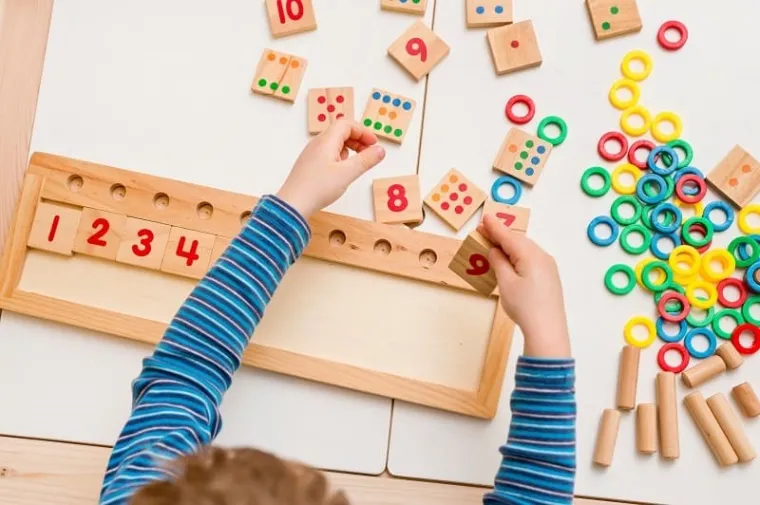
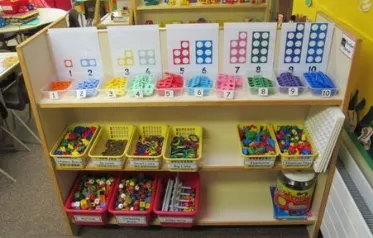
By providing frequent and varied opportunities to build and apply this understanding - such as using manipulatives, including small pebbles and tens frames for organising counting - children will develop a secure base of knowledge and vocabulary from which mastery of mathematics is built. In addition, it is important that the curriculum includes rich opportunities for children to develop their spatial reasoning skills across all areas of mathematics including shape, space and measures.
Early years foundation stage statutory framework 2024
When we think about teaching maths in the early years, our minds often jump to counting songs, number games, or worksheets. But long before formal teaching begins, children are building crucial mathematical understanding through their everyday experiences, often without even realising it. The environments they explore each day, whether in a childminder’s home, a nursery room, or a reception classroom, play a vital role in shaping how they see and engage with numbers, shapes, patterns, and problem-solving.

A well-planned environment doesn’t just support learning, it enables it. It offers children the freedom to explore mathematical ideas independently and through guided play, creating the conditions for deep, lasting understanding. Current evidence, including research from the Education Endowment Foundation (EEF) and the Early Years Evidence Store, highlights the importance of high-quality environments that make maths meaningful, visible, and accessible to all children.

In this blog, we’ll explore what effective mathematical environments look like in different early years settings, what should be available, and how provision can progress to meet children’s growing mathematical abilities, including the critical role of the adult.
The power of relationships: Building strong foundations for mathematical learning
Positive, responsive relationships between staff and children are more than just beneficial, they are foundational to effective learning, particularly in mathematics. Research consistently highlights that the quality of interactions between educators and learners can significantly impact children’s cognitive development and attitudes toward learning, and mathematics is no exception.
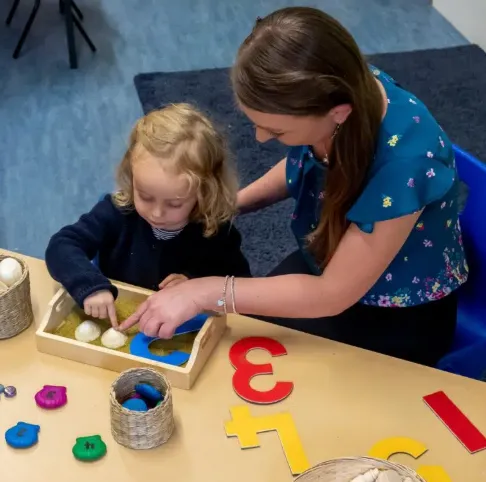
According to the Education Endowment Foundation (EEF), effective early years interventions are grounded in high-quality adult-child interactions. Their guidance on early mathematics underscores that "mathematical learning is most effective when it is embedded in meaningful, everyday interactions with trusted adults." This means that when staff engage children in thoughtful dialogue, encourage exploration, and provide timely scaffolding, they are not only supporting immediate understanding but also cultivating long-term mathematical thinking.
Secure, warm relationships create a safe environment where children feel confident to take risks, make mistakes, and engage in problem-solving. All essential components of mathematical learning. These relationships foster trust, which in turn supports language development, sustained attention, and resilience including key traits for developing numerical fluency and reasoning skills.
Furthermore, the EEF emphasises the importance of "intentional teaching" where practitioners purposefully use rich mathematical language and structured support in everyday routines and play. When delivered by adults who know the child well, these strategies are more likely to be effective because they are tailored to individual developmental needs and interests.
In essence, the development of early mathematical competence is not just about teaching numbers and shapes, it’s about the quality of the learning environment and the relational context in which that learning happens. When children feel known, understood, and supported by the adults around them, their potential for mathematical growth expands dramatically.
The Power of Questions: How adult interactions shape early mathematical thinking
In early years’ settings, it’s not just what we provide for children, it’s how we interact with them that shapes their learning. One of the most powerful tools educators have to support mathematical development in the EYFS is purposeful questioning.
Rather than simply giving children the answers or directing them to the "right" solution, effective questioning encourages children to think, reason, and explain. It helps them to make connections, use mathematical language, and develop a deeper understanding of the concepts they’re exploring, whether they're counting, measuring, sorting, or solving problems through play
Why questioning matters
Research from the Education Endowment Foundation (EEF) and the Early Years Evidence Store highlights the importance of high-quality adult-child interactions. When practitioners use open-ended questions and follow children’s interests, it leads to greater engagement, richer dialogue, and improved mathematical reasoning.
Instead of asking, “What’s 2 + 2?”, consider asking:
- “How did you work that out?”
- “What do you notice about these shapes?”
- “What would happen if we added one more?”
- “Can you find a different way to solve it?”
These types of questions promote sustained shared thinking, an evidence-based approach where adults and children co-construct knowledge through meaningful back-and-forth interactions.
Characteristics of effective mathematical questioning
- Open-ended: Encourages multiple possible answers and ways of thinking.
- Reflective: Prompts children to explain and justify their reasoning.
- Developmentally appropriate: Matches the child’s level while gently extending it.
- Embedded in play: Arises naturally through exploration and hands-on experiences.
From exploration to understanding
A child pouring water between containers is doing more than just playing—they’re engaging with volume and capacity. A skilled adult might ask, “Which one holds more?” or “How do you know it’s full?”, transforming a simple activity into a powerful learning moment.
It’s this blend of child-led exploration and well-timed adult questioning that creates the richest opportunities for mathematical growth
Creating positive learning environments for the development of mathematical development
The physical and emotional environment in which children learn plays a vital role in shaping their early mathematical understanding. Whether in a childminder setting, nursery, or reception classroom, well-designed environments provide the structure, stimulation, and support children need to explore, discover, and develop core mathematical concepts. But what exactly does an effective mathematical environment look like and how should it evolve as children grow?
Why environment matters for maths learning
Evidence from the Early Years Evidence Store and the Education Endowment Foundation (EEF) confirms that high-quality environments support children’s mathematical development by embedding opportunities for exploration and interaction in everyday routines and play. According to the EEF’s guidance on early mathematics, rich learning environments that include both child-led play and adult-guided learning are associated with stronger outcomes in number, spatial reasoning, and problem-solving.
Mathematical development is not confined to a maths table or specific lesson, it’s woven through daily life. A thoughtfully planned environment enables children to encounter maths naturally and frequently, encouraging curiosity and meaningful engagement.
What will we see in effective environments?
In high-quality early years settings, mathematical learning is visible, purposeful, and seamlessly integrated into all areas. Key features include:
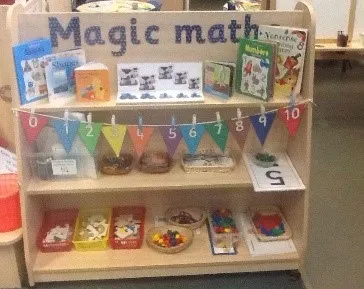
- Accessible, clearly organised resources: Items such as counting objects, number lines, shape sorters, scales, measuring tapes, dice, puzzles, and pattern blocks should be readily available at child height.
- Mathematical language displayed and modelled: Visual aids such as number posters, shape names, size vocabulary, and positional language (e.g. “under,” “next to”) help children absorb mathematical concepts and language.
- Opportunities for exploration and problem-solving: Open-ended resources like loose parts (buttons, shells, bottle tops), construction materials, and natural objects promote counting, sorting, comparing, and measuring.
- Mathematics in the daily routine: Visual timetables, snack-time counting, tidy-up sorting, and outdoor activities like filling and emptying containers all contribute to mathematical understanding.
Adult interactions that support thinking: Skilled practitioners use questioning and dialogue to extend learning, “How many more do we need?”, “What comes next?”, “How can we make it fair?”
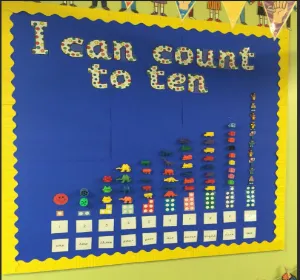
What should be available and how should It progress?
A progressive approach to the environment ensures that as children grow, the mathematical opportunities grow with them. Here’s how this progression might look:
Childminder settings and toddler rooms
- Focus: Early number sense, spatial awareness, sorting, and comparison.
- Environment: Everyday routines used for counting (e.g. steps, fruits), sensory trays with different-sized containers, simple puzzles, shape and colour matching activities.
- Adult role: Narrating play, modelling number language, encouraging comparisons (big/small, more/less)
In Nurseries and Pre-Schools (3–4 years):
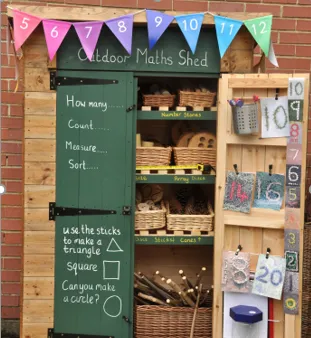
- Focus: Counting with one-to-one correspondence, early addition and subtraction, shape recognition, understanding size and order.
- Environment: Number lines, manipulatives (e.g. counting bears), role-play areas with pretend money, measuring tools, pattern blocks.
- Adult role: Introducing early mathematical strategies, supporting sustained shared thinking, using open-ended questions
In Reception Classes (4–5 years):
- Focus: Number bonds, subitising, number composition, spatial reasoning, simple operations, problem-solving.
- Environment: Numeracy-rich areas with targeted challenges, opportunities for writing numbers, small-world play for problem-solving scenarios, structured and unstructured resources for exploration.
- Adult role: Intentional teaching, targeted small-group maths sessions, promoting reasoning and justifying answers.
The evidence behind the practice
According to the Early Years Evidence Store, creating enabling environments that support mathematical learning is closely linked to improved outcomes. The most effective settings use a balance of direct teaching and embedded learning through play and interaction. The EEF’s Improving Mathematics in the Early Years and Key Stage 1 guidance report also highlights the importance of integrating maths into routines and environments to help children make connections and deepen understanding.
Conclusion
The environment in childminding, nursery, and reception settings should do more than "contain" children, it should inspire them. A rich, inviting, and well-planned space helps children encounter mathematics in natural and meaningful ways. By combining engaging materials with skilled adult support, settings can foster a love of maths and build the strong foundations children need to succeed as confident, curious mathematicians.
Next steps
Join us in the new academic year as we provide training webinars and face to face walkthroughs as we explore the 5 significant areas mentioned in the EYFS evidence store for development of mathematics.
- Teaching the Association between number and quantity
- Promoting fluency with numbers and sequences
- Teaching problem solving skills for maths
- Teaching and modelling how to make comparisons and connections
- Facilitating mathematical language
References
Improving Mathematics in the Early Years and Key Stage 1 | EEF
Early years foundation stage (EYFS) statutory framework - GOV.UK
Improving early education through high-quality interactions | EEF