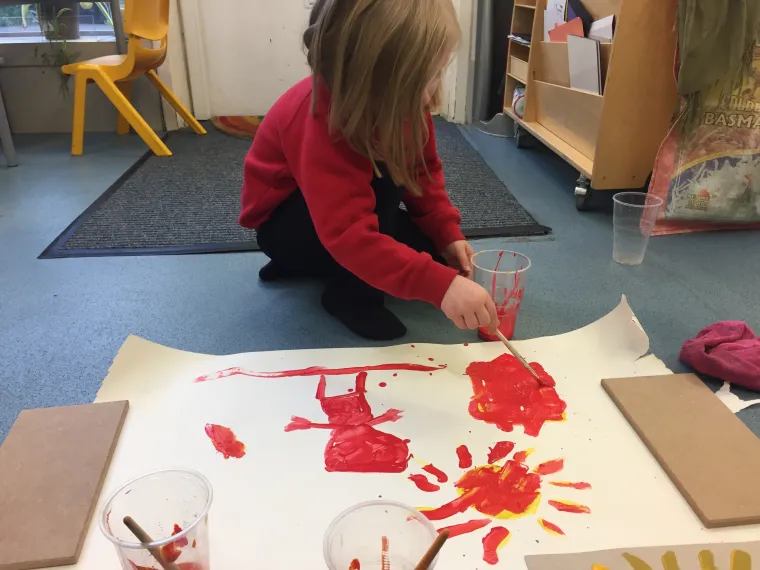

One year at Charles Dickens Primary School and Nursery we had the capacity to create a resource base for our reception classes during the autumn term to allow a longer transition time for the children who needed this. Getting the transition right from nursery to reception is well worth dedicating time to especially for our most vulnerable learners.
An eco classroom close to our forest school was organised into a friendly space with plenty of construction materials, small world and messy play type resources to help ease the transition from nursery into reception. Skills not yet fully developed could be practiced and repeated without fear of the schema play being interrupted. The proximity to the forest school allowed for daily interactions with nature and time to develop core language related to the children’s immediate surroundings.
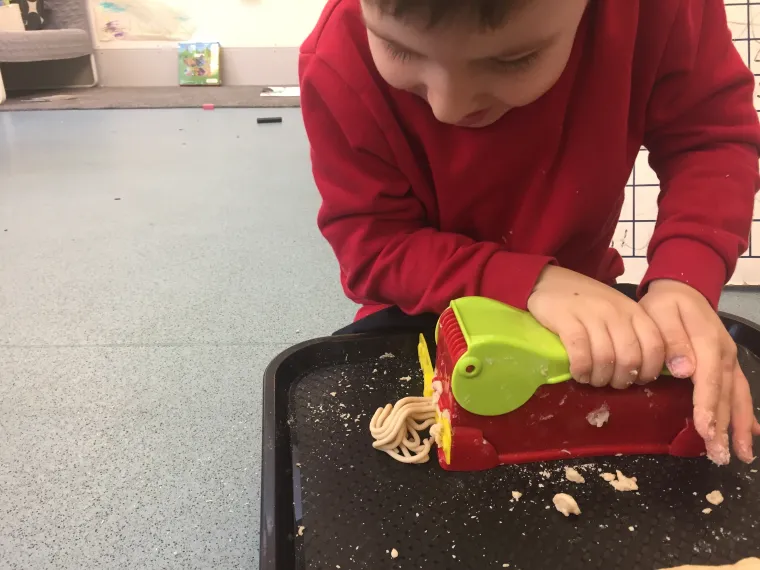
Children with identified language and sustained attention needs accessed the resource base daily. The aim was for the children to build the skills necessary to be able to access their main class for longer periods.
Alongside offering targeted support in small groups and an increase of 1-1 interactions, time was spent working with the wider reception team to create an inclusive, high quality, positive and supportive environment for everyone. The elements of ShREC were used to support quality interactions.
Share Attention - noticing what the child notices
Respond - narrating the activity, smiling and or nodding with interest
Expand - adding to the child's responses
Conversation - building the to and fro interactions taking the lead from the child in a warm and meaningful way
The key areas we planned for in the resource base were, communication and language, personal social and emotional development and physical development whilst also keeping up with the specific areas, being covered in the main reception class so basic language and concepts covered by their peers would be familiar. Where gaps in learning are obvious it is the prime areas that take centre stage in terms of focus. These cannot be skipped as they form the foundation on which to build all subsequent learning.
Language Development was supported with:
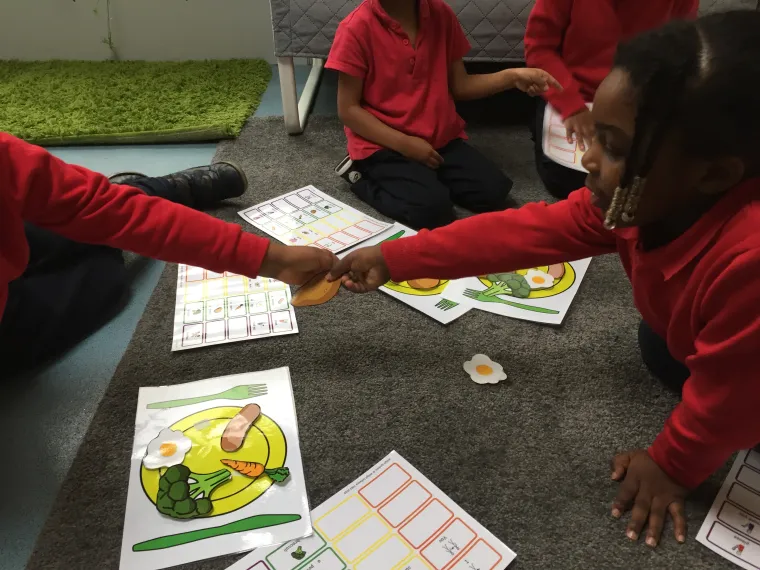
- ALS potato head and dinner time choice boards/ language and vocabulary practice, “I want the carrot Please” “You can have the carrot”
- Daily conversations with adults aiming for at least 4 to and fro interactions
- Discussions around class texts/ interactive reading
- Desirable resources motivating the language of request / encouraging spontaneus language use
Personal, Social and Emotional Development
Was supported with:
- Daily greeting
- Taking turns
- Developing concentration through daily bucket time
- Listening to each other and making decisions as a group
- Sensory activities
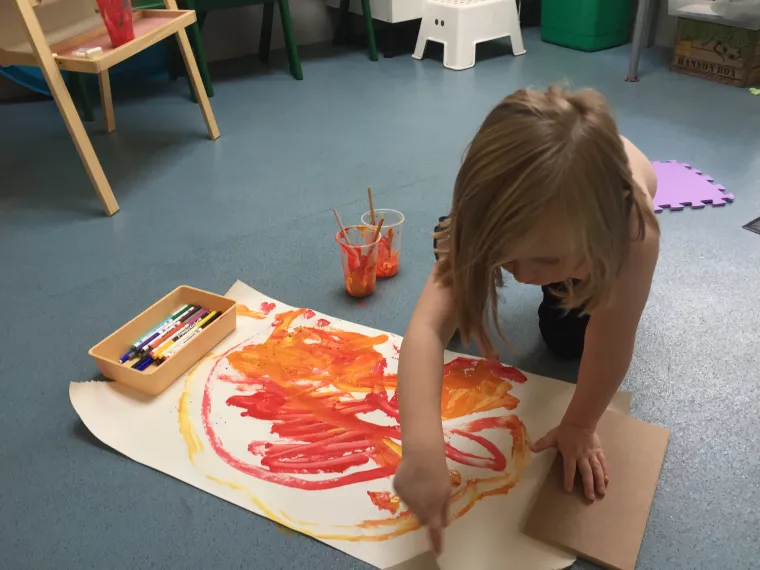
Average time at an activity
2 minutes ~Autumn 1
8 minutes ~Autumn 2
Average length of sentences
3 words ~Autumn 1
6 words ~Autumn 2
Physical development was supported with:
- Daily fine motor activities
- Gym time
- Maintaining good hygiene
Toilet training
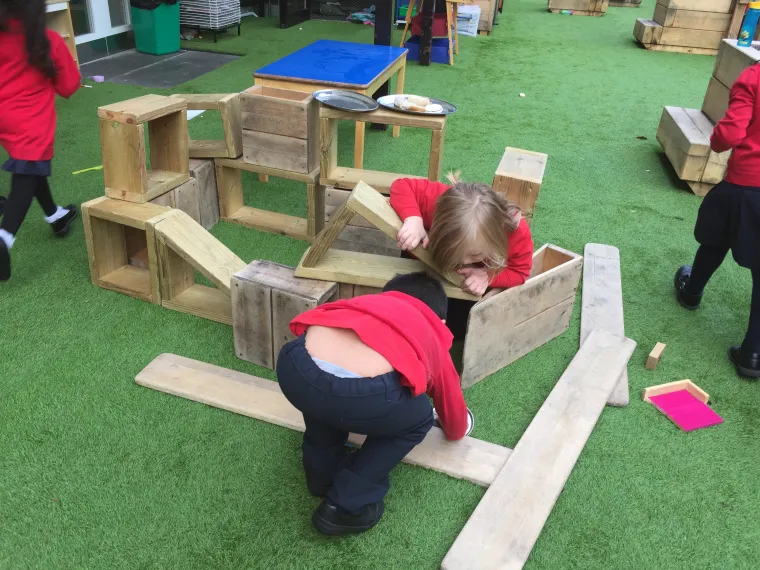
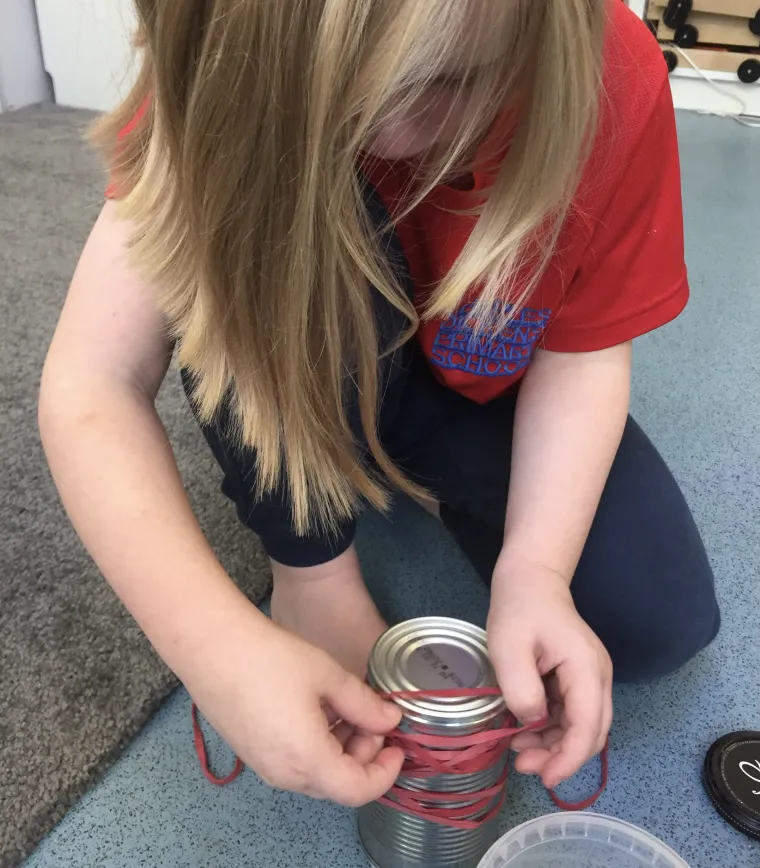
Rich experiences were also planned for to increase motivation to speak and cultural capital.
- Forest School garden time
- Mini trips
By delivering experiences outside of the classroom environment we provided a richness that stimulated talk. The children had an intrinsic motivation to speak about their surroundings. They especially liked to point out what they observed which allowed an adult to build on their thinking and language by turning their observations into conversation starters, “Ah, that is well spotted. I wonder what you could use it for?”
We found indirect questioning often stimulated more talk.
“I wonder what this stick could become”
“That looks interesting. What could it be?”
“Tell me about your picture”
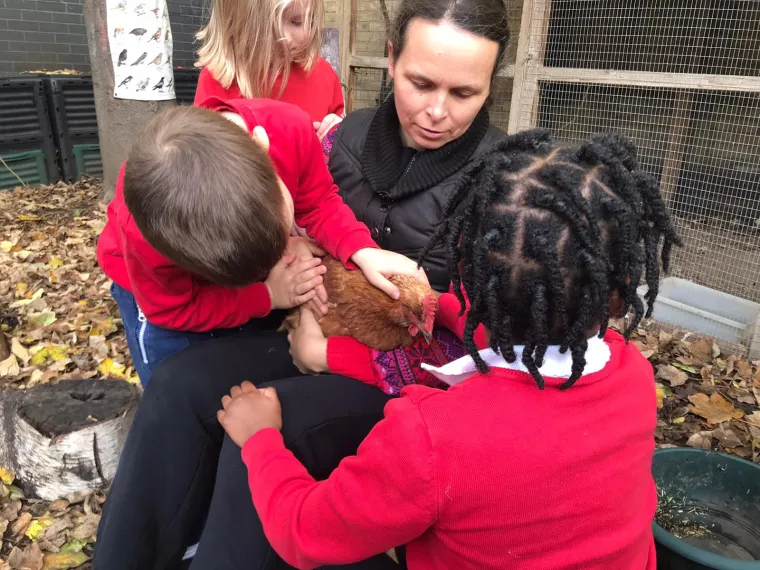
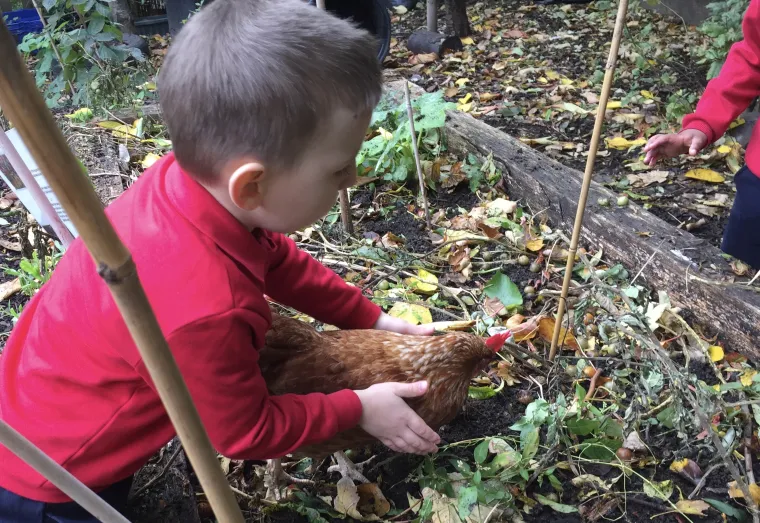
The very tricky task of catching the chickens to take them back to their coop was done very successfully by one of our learners. It was extremely satisfying for him to succeed in a task which was really difficult for most of his peers.
The close partnerships between pupils, parents, class teachers, the EYFS lead and SENCO ensured a very concentrated first term that enabled the majority of children to join their main classes with higher levels of speech, social skills, collaboration and physical development.
Consistent with the EEF guidance, support from the most experienced staff for the most in need pupils makes the greatest difference. It is really worth considering having management and leadership teams giving time, as often as possible, to supporting the most vulnerable learners.