
By Ruth Coleman - East of England Early Years Stronger Practice Hub Lead
As we approach the implementation of the new Early Years Foundation Stage (EYFS) nutrition guidance in September 2025, early years providers across England are being called to raise the bar on the food they serve. With the Department for Education (DfE) setting new expectations and our resident hub expert, Catherine Jeans offering practical, child-centred strategies, now is the perfect time to rethink how we nourish our youngest learners. The East of England Stronger Practice Hub is offering a fantastic series of webinars with Catherine over the coming months to help support your thinking when planning menus for the children in your setting.
What’s new in the DfE Nutrition Guidance?
Early Years Foundation Stage nutrition - GOV.UK
The updated EYFS nutrition guidance is more than a policy tweak—it’s a shift in mindset. From September 2025, all early years providers must follow this guidance unless they have a valid reason not to.
The goal? To ensure every child receives meals that are:
- Healthy, balanced, and nutritious
- Appropriate for their age and developmental stage
- Supportive of long-term health and positive eating habits
The guidance includes:
- Portion sizes for ages 1–5
- A “healthy plate” model with four food groups
- Sample menus and recipes
- Advice on allergies, intolerances, and cultural diets
- Strategies for cost-effective, inclusive meal planning
Catherine Jeans, known as The Family Nutrition Expert, brings a wealth of experience in children’s health, neurodiversity, and functional nutrition. Her work focuses on making nutrition accessible, enjoyable, and tailored to each child’s needs. For those attending the webinars – we have 50 copies of her book, ‘Racing the Rainbow’ to give away.
In her hub webinars for early years practitioners, Catherine will cover:
- Picky eaters
- Vegan menus
- Planning for children with neurodiversity
- Children with allergies as well as all the nutrition essentials we need to know
Catherine’s mantra? Healthy eating doesn’t have to be complicated — it’s about finding what works for your setting and your children.
Building a Balanced Lunch Menu: Step-by-Step
Here’s how to plan a weekly lunch menu that aligns with both the DfE guidance and Catherine Jeans’ practical approach:
1 - Start with the Four Food Groups
- Starchy foods (e.g., wholegrain pasta, potatoes)
- Fruit and vegetables (aim for variety and colour)
- Protein sources (e.g., beans, lentils, eggs, fish, lean meat)
- Dairy or alternatives (e.g., yogurt, cheese, fortified plant milks)
2 - Keep it low in Salt and Sugar
Avoid processed foods high in salt or added sugars. Use herbs, spices and natural sweetness (like fruit) to enhance flavours
3 - Offer Water and Milk Only
Water should be the main drink throughout the day, with milk offered at snack times
4 - Include Brain-Boosting Nutrients
Inspired by Catherin Jeans’ work on neurodiversity, include:
- Omega-3s (e.g. oily fish, chia seeds)
- Magnesium and zinc (e.g. pumpkin seeds, whole grains)
- Iron-rich foods (e.g. lentils, spinach, lean red meat)
5 - Plan for Inclusion
Ensure meals accommodate:
- Allergies and intolerances
- Cultural and religious dietary needs
- Sensory preferences and neurodivergent children
6 - Involve Children and Families
Use food activities, tasting sessions and parent communication to build excitement and trust around new foods.
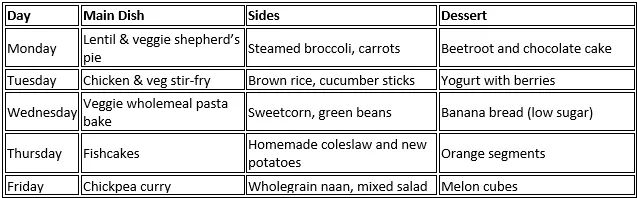
Sample Weekly Menu Snapshot
Case Study
Around 8 years ago, we noticed the declining quality of the contents of lunch boxes in the nursery and the ‘bought in’ hot lunches from the local primary school arrived looking soggy and unappetising from the journey across town. On a training day, the headteacher asked me ‘If you could make one change, what would it be?’… and that’s how I became responsible for introducing up to 90 freshly made, nutritious daily hot meals at my nursery school.
We started by surveying parents and they overwhelmingly voted ‘yes’ to a nutritious two course hot lunch. We recruited kitchen staff and bought new crockery, cutlery and serving dishes (not a plastic dish in sight!)and then set about writing our first menu. The menu now includes some meat free days, a rainbow of salad, vegetables and fruit and each dessert contains at least 30% fruit or veg within it.
We sourced a local butcher, fish monger, green grocer and cheese supplier and then ordered dry ingredients from our local supermarket. Every dish is made fresh, daily and does not contain any ultra-processed food. Two years later we had to upgrade the kitchen and with the help of a grant, upgraded to the kitchen we have today.
My aim was always to help children to anticipate that food will taste good and benefit from a delicious, nutritious menu. Key favourites include fish pie and turkey keema curry, as well as beetroot and chocolate cake and homemade fruit ice lollies on the hottest of days!
Final Thoughts
Whenever implementing a new strategy, be mindful of the implementation process to drive success. The EEFs Guide to Implementation A School’s Guide to Implementation | EEF can support you with this.
The new DfE guidance gives us a framework, but it’s the creativity and care of practitioners—guided by experts like Catherine Jeans—that will bring it to life. By planning with intention, embracing inclusivity and making food fun, we can help every child build a healthy relationship with food that lasts a lifetime.