

Ruth Coleman is Headteacher of Highfield Nursery School. She is also the Lead for the East of England Early Years Stronger Practice Hub.
Young children are naturally curious about the world around them. They notice small differences and patterns when as adults in a busy world, we sometimes don’t. Children will also use maths in their play. This may be sorting objects, solving problems, or telling time and sharing with friends. This curiosity also supports thinking skills and problem solving.
Practitioners often say to me ‘I can’t do maths’ or ‘I’m not very good at maths’ and this seems to be a sticking point with many practitioners feeling confident in developing maths within their settings.
The EEF guide EEF_Maths_EY_KS1_Guidance_Report.pdf (d2tic4wvo1iusb.cloudfront.net) is a great starting point.
Becky Francis, from the EEF says ‘not all children learn the skills they need to succeed. In 2018, just 66% of disadvantaged children achieved at least the expected level of development for number at the end of the Early Years Foundation Stage compared to 82% of their peers. Once children fall behind, it is hard for them to catch up and they are likely to fall further behind throughout school.’
How do children typically learn mathematics?
1. It is extremely important that practitioners know their children well. The key person system in Early Years lends itself well to this as practitioners have a small group of children they support throughout their time at nursery.
2. Early Years settings also have a culture of developing curiosity, sustained shared thinking and problem solving the everyday activities.
3. Practitioners then need to provide opportunities to engage in appropriate, planned, cognitively challenging activities.
Opportunities for Mathematics everyday
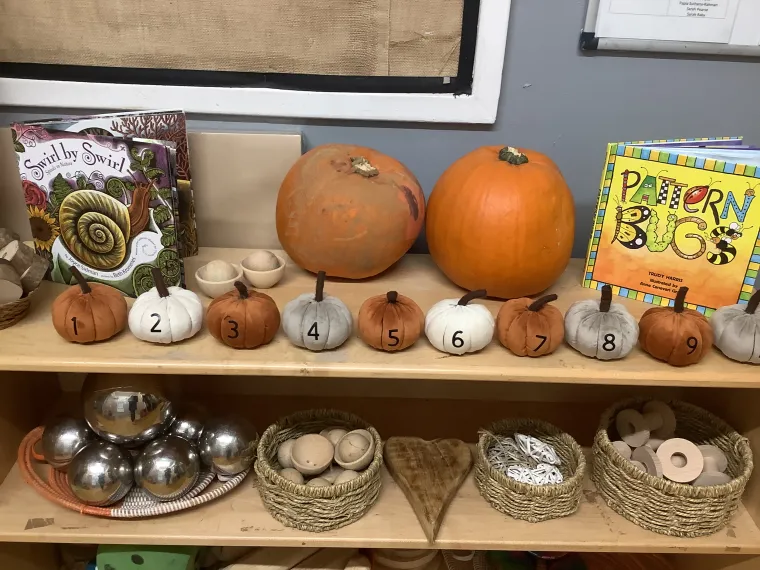
There should be opportunities for children to learn about mathematics throughout each day. This can be built into routines (how many cups do we need for snack today?) and through child adult interactions, such as sharing books, puzzles, number songs, rhymes and games.
Using story books is particularly effective. At Highfield Nursery School, we share a Story Curriculum and link planned maths activities to the stories we are sharing. For example, when reading Peter Rabbit, we would sing ‘5 currant buns’, representing when Mrs. Rabbit goes to buy the currant buns for her family. The children make salt dough currant buns, have real pennies to buy currant buns then sing the song together. We develop a strong understanding of the ‘fiveness of 5’ and use manipulatives to support this. We may also plan to sort and group vegetables – by size, colour or whether they grow above or below the ground.
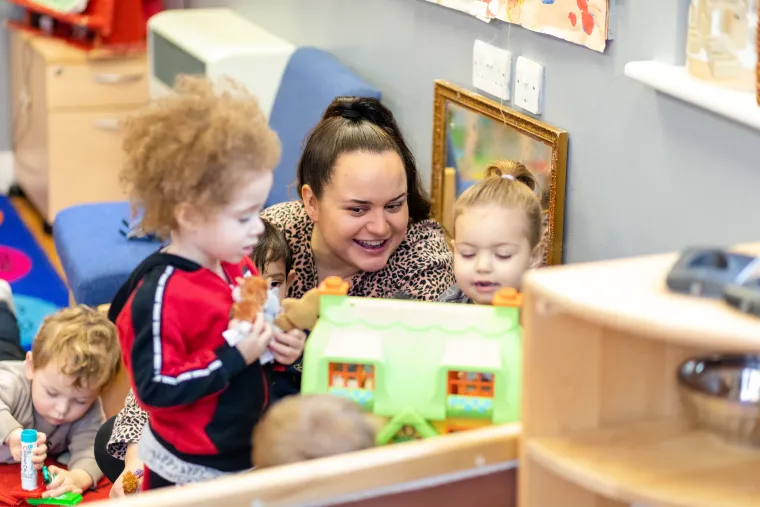
These activities form part of the carefully planned, rich and varied learning environment, sequenced throughout the year. Mathematical learning will be supported by child-initiated learning and incidental teachable moments throughout the day. Practitioners can reinforce maths vocabulary throughout the day. For example, they can use ordinal numbers during stories, like Father Christmas Needs a Wee or the story of the first Lunar New Year. They can also use them in incidental moments, such as the order children are standing in.
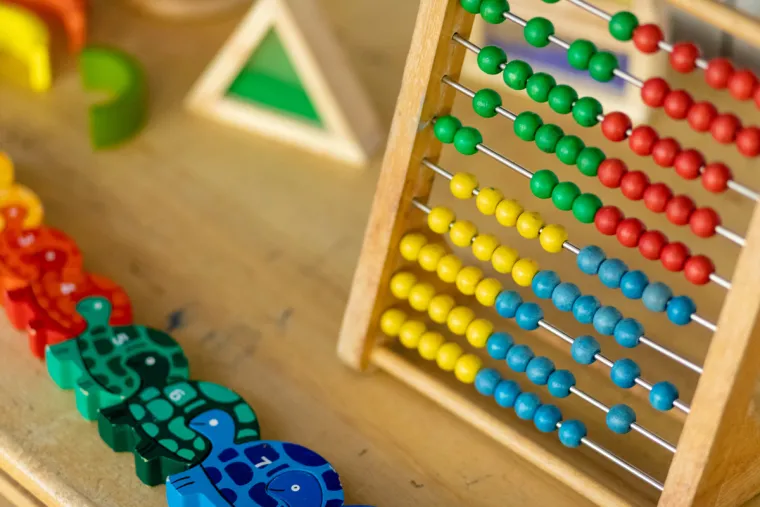
It is important to encourage children to use maths language. They should use words like ‘curved’, ‘pointy’ or ‘smaller than’. This should become part of daily talk. The practitioner's skill is to decide how to introduce this language. For example, it may be better to introduce a shape and its properties slowly, rather than all the shapes at once. Practitioners and parents can work to reinforce the language over time ensuring a consistent approach.
Practitioners also need to make the most of opportunities to rephrase ambiguous statements. For example, they can correct a child who says ‘big’ to mean ‘tall’ when talking about an Emperor penguin in The Emperors Egg.
As early years practitioners, we are experts at being attuned and responsive to the children in our class/setting. We understand their behaviours and motivations. We can use this knowledge and skill to highlight maths throughout the day and we can do so in meaningful ways.